
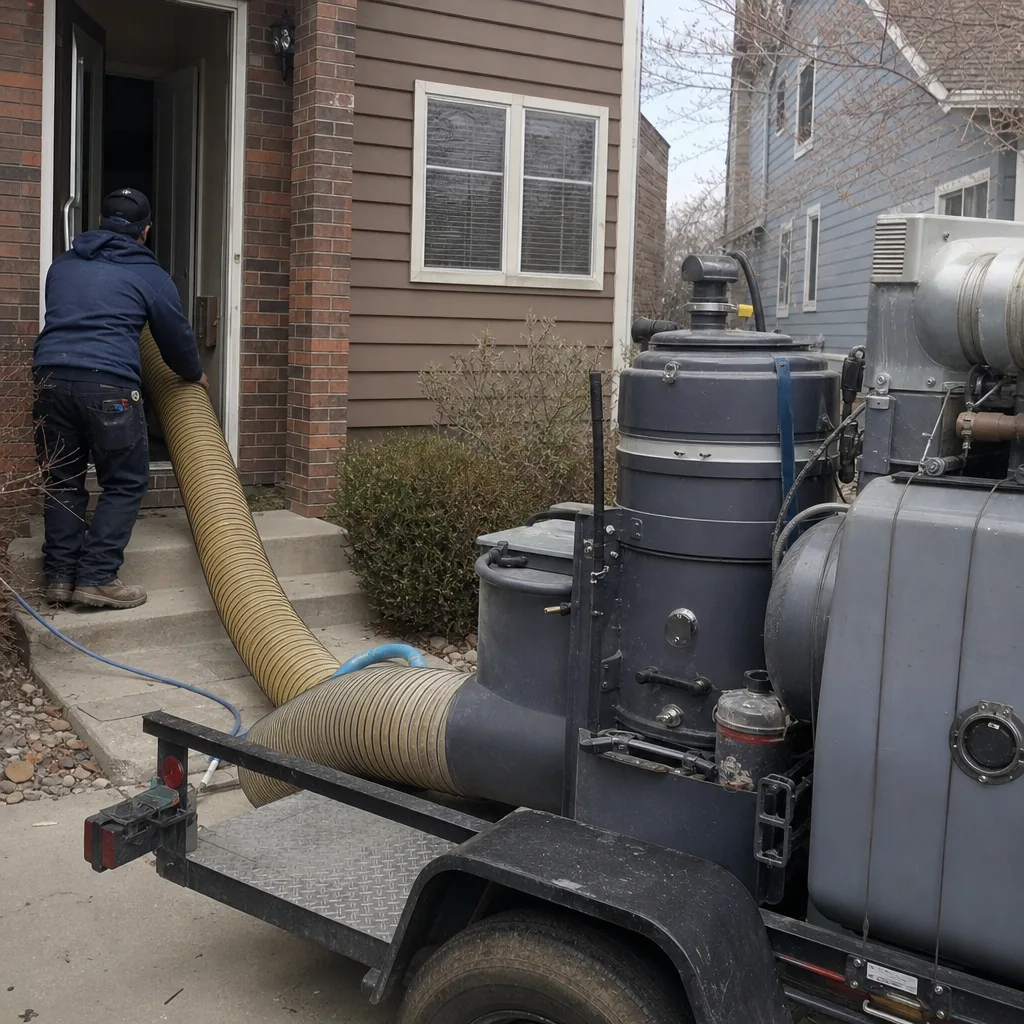
Last updated November 25, 2026
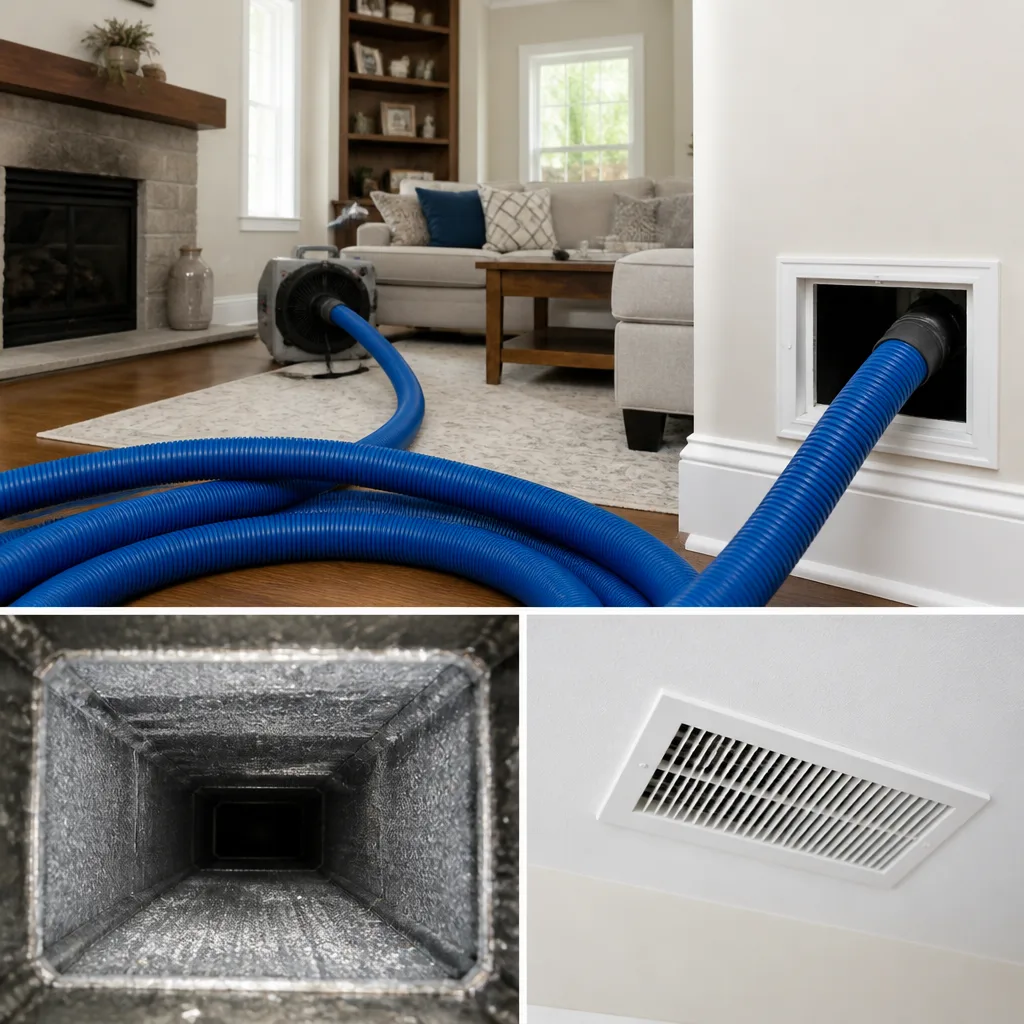 Whole-home duct cleaning
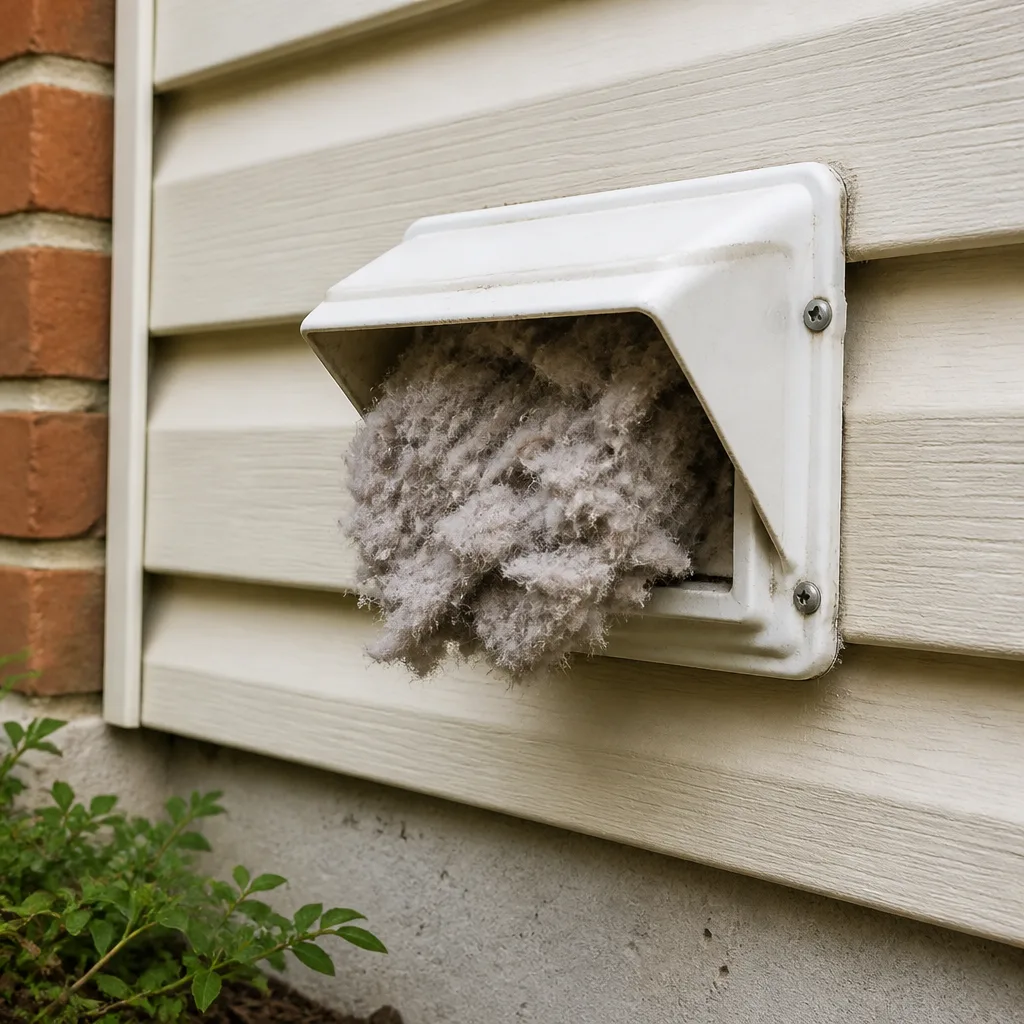 Dryer vent cleaning
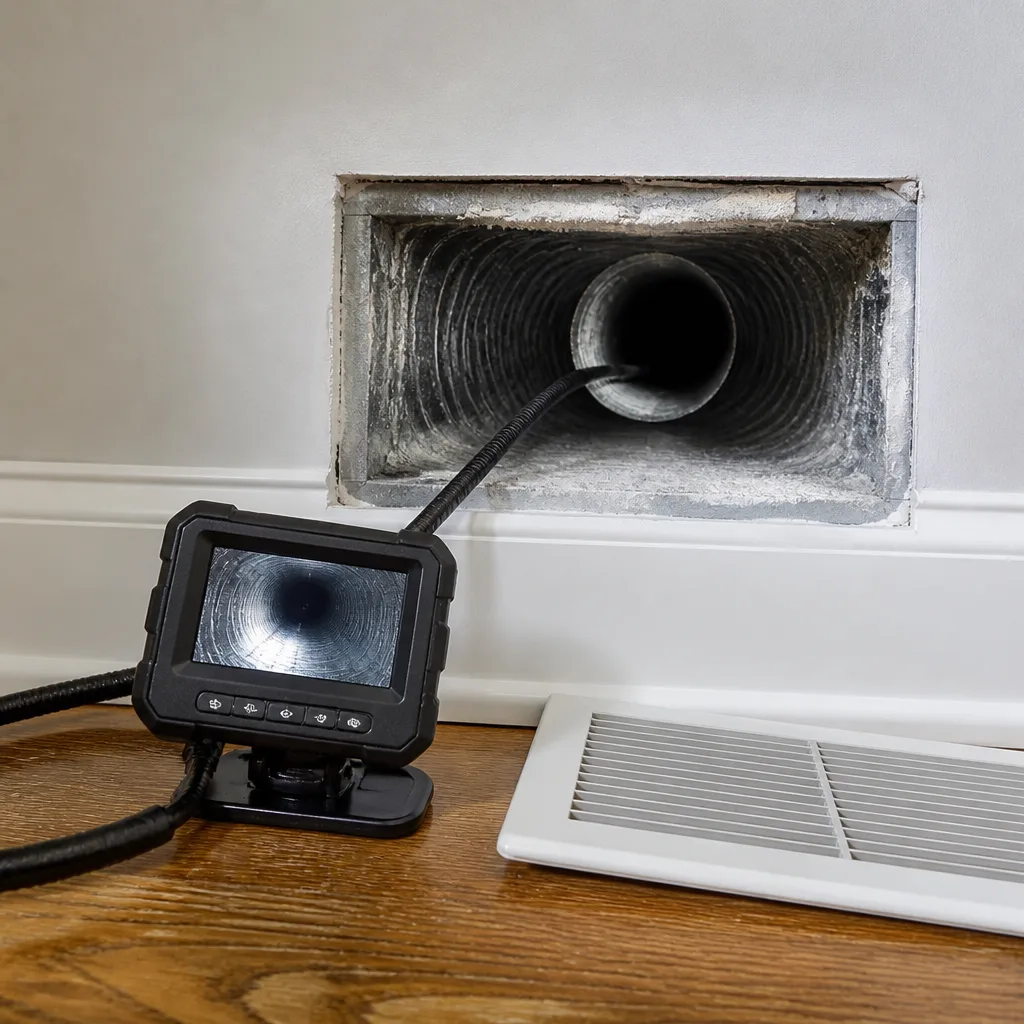 Camera inspection
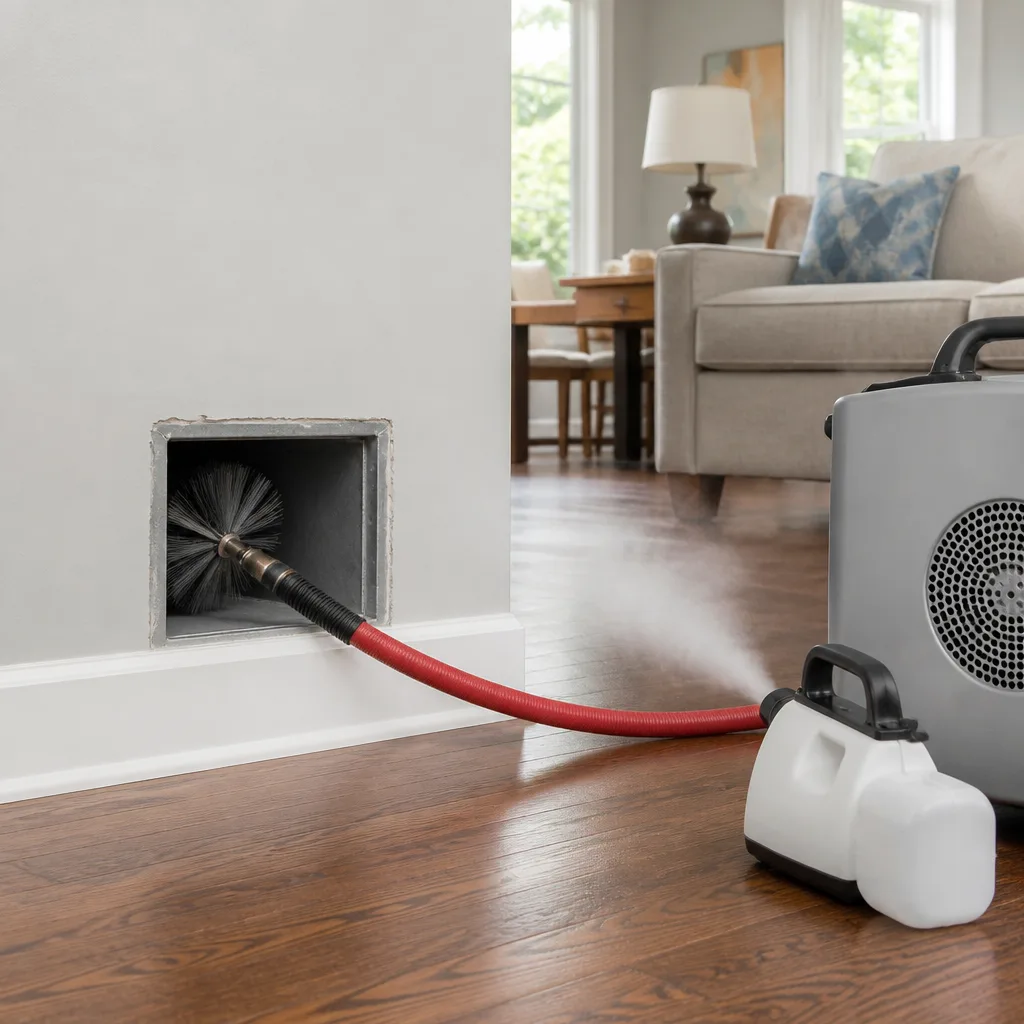 Sanitizing & deodorizing
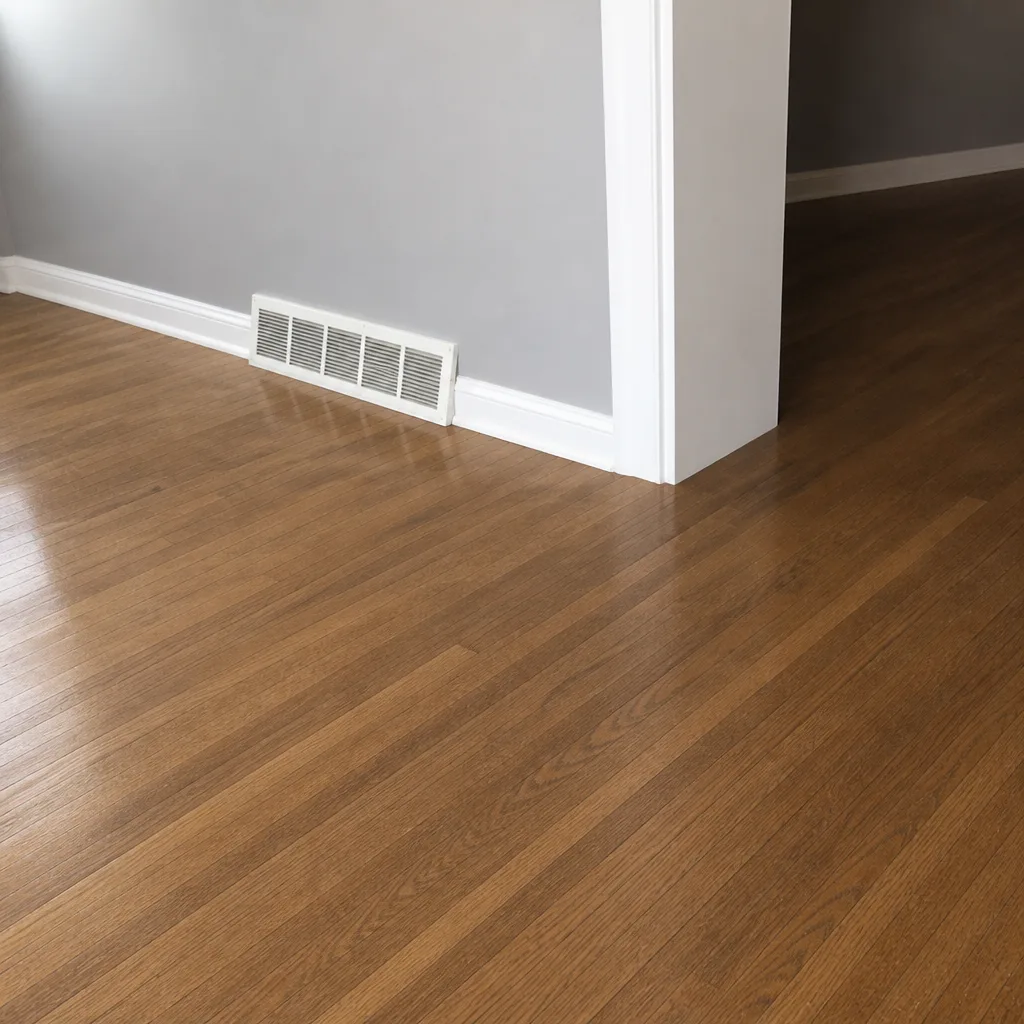
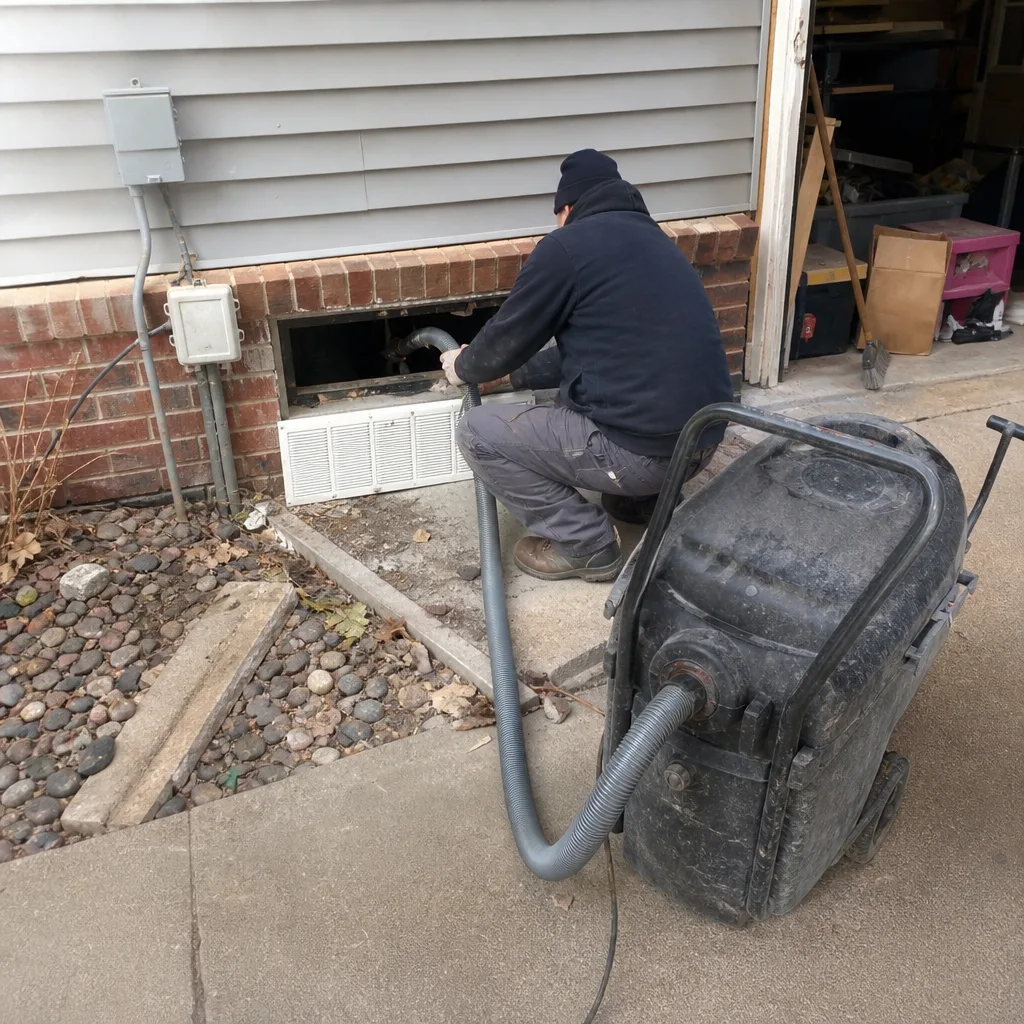
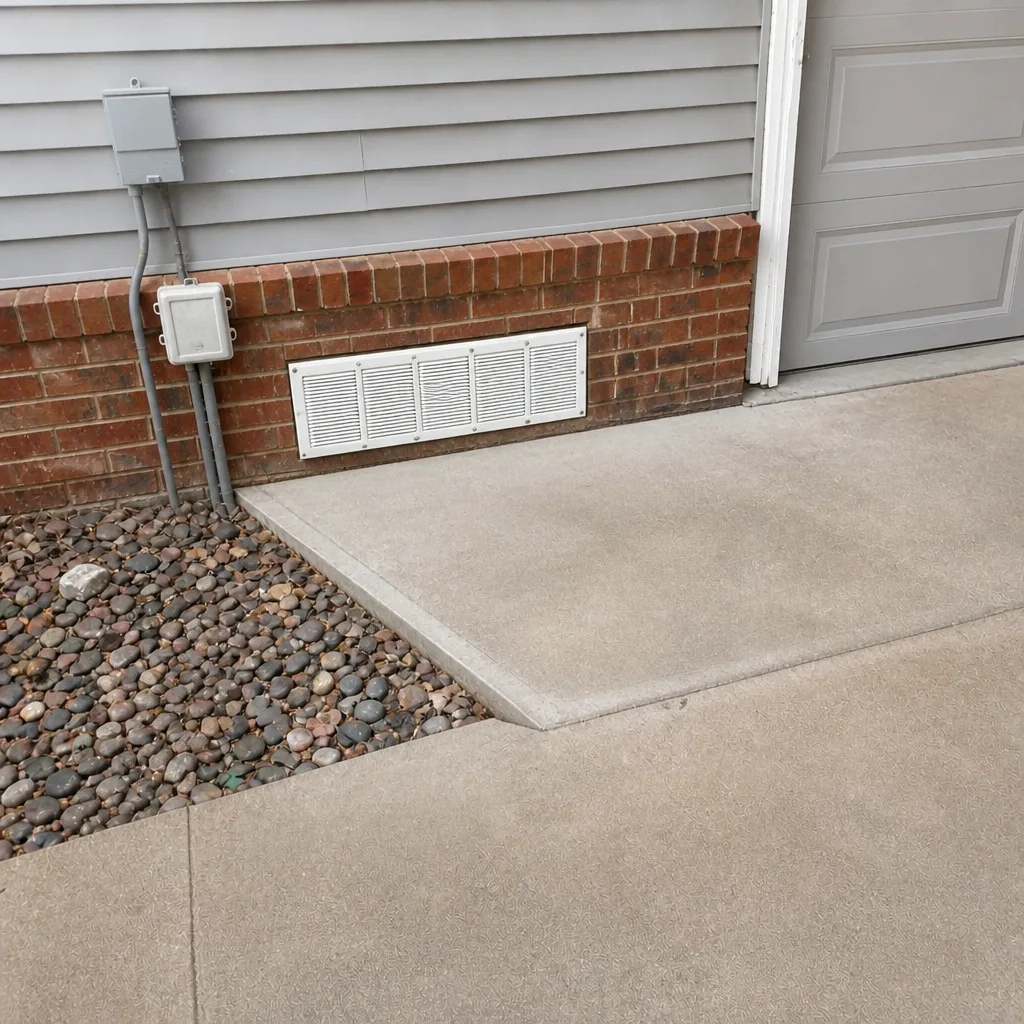
Whole-system duct and dryer vent check with before-and-after photos - you see exactly what came out of your vents
That "$99 whole-house special" is a bait ad - the real number appears once they are in your hallway, or the "clean" is a shop-vac at the register. We photograph the inside of your ducts before and after instead.
Air Duct Cleaning Warning Signs: A Green Valley Ranch Homeowner’s Reference Guide
Dust on your furniture is one of the least reliable indicators of dirty ducts. Most of what settles on a shelf is household debris: skin cells, fabric fiber, tracked-in soil, and whatever the dog dragged in. If dust were the test, almost every home would fail it. The signs that actually point to a duct problem look different. They show up as airflow imbalances between rooms, pressure you can feel at a return grille, or an odor that appears only when the HVAC cycles on. In this guide we’ll walk through the mechanical and airflow-based signals that matter, how to tell a duct smell from an air handler smell, and what Green Valley Ranch homeowners should watch for given how hard this climate pushes a heating and cooling system.
Quick Answer
The most reliable signs of a duct problem are airflow-based, not dust-based: rooms that never reach their set temperature, registers with noticeably weaker output than others, return grilles that barely pull, and odors that follow your HVAC cycle. Visible buildup beyond ordinary dust at registers, and rising runtime on a smart thermostat, confirm the pattern. If two or more of those show up together, it’s worth a professional inspection before you assume the equipment is failing.
Styles & brands we work with
- Whole-home duct cleaning
- Dryer vent cleaning
- Camera inspection
- Sanitizing & deodorizing
Table of Contents
- Airflow Warning Signs You Can Feel
- Reading Odor Patterns: Ducts vs. Air Handler
- What to Look For at Registers and Grilles
- Using Smart Thermostat Runtime Data as a Duct Efficiency Signal
- Wildfire Smoke Infiltration: A Green Valley Ranch Trigger
- Return Grilles, Pressure, and What They Tell You
- When the Fix Is Repair and Sealing, Not Just Cleaning
- When It’s Time to Bring in Professional-Grade Equipment
Airflow Warning Signs You Can Feel
Airflow is the first place a duct problem announces itself, and it announces it unevenly. A duct system that’s lost capacity through buildup, crushed flex runs, or separated joints doesn’t fail all at once. It fails room by room. That’s why the complaint we hear most often isn’t “the house is dirty” – it’s “the back bedroom is always cold in winter and hot in summer, and the thermostat says the system is doing its job.”
Here are the airflow symptoms worth taking seriously:
- One or two rooms never reach the set temperature while the rest of the house is comfortable. That gap is the signature of a duct system delivering uneven volume, not a failing furnace or air conditioner.
- Noticeably weaker output at some registers than others. Hold your hand a few inches from each supply for thirty seconds. You’ll feel the difference quickly. A weak register on the longest run is normal; a weak register near the equipment is not.
- Return air grilles that barely pull. A return that feels starved means the system is starving the whole loop. Restricted returns raise static pressure and reduce delivery to every room downstream.
- Whistling or rushing noise at one grille. A single loud grille usually means the air is being forced through a restriction somewhere in that run.
- The system runs a long time to move the needle. When airflow drops, the equipment compensates by running longer. That shows up in your energy bill and your thermostat history before it shows up anywhere else.
None of these signs tells you the ducts are dirty on their own. They tell you the system is restricted or leaking. Diagnostics come next, and the right diagnostic depends on where the restriction sits. If the return side is restricted by accumulated debris on the filter grille and the interior of the return trunk, cleaning may be the answer. If the supply runs are crushed, disconnected, or leaking at joints, the fix is air duct cleaning Green Valley Ranch paired with duct repair and sealing. In our experience, the two problems often run together because a leaking duct pulls unfiltered attic or crawlspace air in, and that air brings dust and moisture with it.
Green Valley Ranch homes sit in a climate that punishes airflow problems harder than a mild climate would. Long cooling seasons mean the system runs a lot of hours, and every hour of restricted airflow compounds the strain on the equipment. A duct system that would limp along in a cooler climate can become a real comfort problem here.
Reading Odor Patterns: Ducts vs. Air Handler
Odors are the most misunderstood warning sign. “Musty smell” gets blamed on ducts almost automatically, but a musty smell can start in three different places, and the fix is different in each case. The way to sort it out is to watch the timing of the smell against the HVAC cycle.
Odors that point to the duct system
- The smell appears within a minute of the blower starting and fades when it stops. That pattern points to contamination sitting in the ductwork that gets disturbed by the moving air.
- The smell is worse in one room or one zone. If the odor tracks a specific supply run, the contamination is likely localized to that run.
- The smell intensifies in late summer or after a humid stretch. Ducts in a hot, dry climate can still pick up moisture from the cooling coil and condensate area, and dust plus moisture turns into a smell.
- Return grilles smell stronger than supply registers. The return side draws air across accumulated debris, so the source is often on the return trunk or the filter grille.
Odors that point to the air handler
- A smell that’s present even when the fan is off. If the odor hangs around with the system idle, it’s probably not coming out of the ducts.
- A smell that changes when you switch from heat to cool. The heat exchanger, coil, or drain pan can hold odors that show up only in one mode.
- An electrical or burning smell. That’s an equipment issue, not a duct cleaning issue. Turn the system off and get it looked at. Don’t run the fan to “clear it out.”
The distinction matters because cleaning the ducts won’t fix an air handler problem, and replacing an air handler won’t fix a duct problem. Getting the diagnosis right is the whole job. A technician with a full-system approach can tell the difference because they’re checking the coil, the drain pan, the cabinet, and the ductwork as one connected pathway.
What to Look For at Registers and Grilles
Visual inspection has a place, as long as you know what’s ordinary. Every home has some dust on the face of a supply register. That’s normal and it’s not a warning sign. What’s worth noting is dust that’s beyond the face of the grille, and buildup that’s concentrated rather than uniform.
Here’s what reads as a real visual signal:
- Fuzzy growth or a matted layer on the inside of the register opening. Look past the face grille with a flashlight. A matted, fibrous layer on the inside of the supply boot is a genuine signal. A faint monotone film is not.
- Streaking or dark trails on the wall or ceiling near a register. That usually means air is escaping around the boot rather than coming out of it, and the streaks are the debris it carried.
- Visible dust on the return filter grille itself. If the filter face is uniformly grey, that’s the filter doing its job. If the filter is clean but the grille behind it is dusty, or the filter has collapsed out of its frame, the return side is under pressure.
- Loose debris around the boot collar. If there’s a visible gap where the flex run meets the boot or the plenum, that’s a leak, and it’s bringing unfiltered air in behind it.
- Corrosion or moisture marks on metal duct sections. In a dry climate this shouldn’t happen, so when it does, it usually traces back to condensate or a coil problem rather than ambient humidity.
The takeaway is that a flashlight and a short inspection around three registers and two returns will tell you more than the top of your bookshelf will. If you want to see what a proper full inspection covers, the air duct cleaning service page lays out the process.
Using Smart Thermostat Runtime Data as a Duct Efficiency Signal
If you have a smart thermostat, you have a free diagnostic tool sitting on your wall. Most of these devices collect runtime data: how many hours per day the system runs, how long it takes to reach the set point, and how often it cycles. That history is a useful proxy for duct efficiency, because it captures the system’s effort rather than just its output.
Here’s how to read it:
- Pull up the weekly runtime report. Most smart thermostats produce one in their companion app.
- Look for a rising trend in runtime over a season. If your system needs noticeably more runtime to hold the same set point than it did at the beginning of the season, and nothing else has changed (filter, weather assumptions, thermostat schedule), that trend is worth investigating.
- Compare short cycling against long, slow runs. Short cycles with normal delivery can point to equipment or sensor issues. Long continuous runs with uneven delivery point toward restriction.
- Watch time-to-setpoint. If it takes twenty minutes to go from set point to set point after a program setback where it used to take ten, the change is the story, not the raw number.
- Cross-check against room sensors. Thermostats with remote room sensors give you the strongest signal of all. If one room’s sensor consistently disagrees with the thermostat in the same house, you have an airflow imbalance in writing.
- Log the data for two weeks before you call. A technician can diagnose airflow in an hour, but a runtime trend turns “I think it runs too much” into “it’s running forty percent longer than it did in June,” and that’s much easier to work from.
Smart thermostat data doesn’t identify the problem by itself. It flags the pattern. The diagnostic still needs to happen in person, with tools that can measure static pressure and airflow at the equipment and at the registers. But the data gets you to the right conversation. Some systems pair well with zoning controls from Honeywell or Aprilaire, and if the imbalance is structural rather than contamination-driven, the fix might be a controls adjustment rather than a cleaning. Getting the diagnosis first matters.
Wildfire Smoke Infiltration: A Green Valley Ranch Trigger
Green Valley Ranch sits on the eastern edge of the Denver metro, on open ground where wind moves fast and smoke from regional fires can push in for days at a time. That geography creates a specific warning sign pattern worth knowing, because it’s different from ordinary indoor odors and different from a duct cleaning problem.
Here’s how to tell smoke infiltration from a lingering indoor smell:
- Timing tracks the forecast, not the HVAC cycle. If the indoor smell worsens on a smoky day and fades when the air clears, you’re looking at infiltration, not duct contamination.
- The smell arrives on the return side. A return grille that draws smoky outdoor air through a leak will push that smell into every supply. That points to a leak in the return path or at the cabinet.
- The smell is worse near doors and windows. That’s envelope infiltration, and cleaning the ducts won’t solve it. Sealing the return, upgrading filtration, and running a properly sized portable purifier during smoke events will.
- The smell persists after the smoke clears. If it does, the ducts may have become a reservoir. That’s when cleaning and sanitizing, with a Guardsman treatment to help keep the interior clean, earns its place.
One distinction worth flagging for anyone who’s had a fire nearby: the musty, resin-like smell of ash deposits is different from the odor of a hot system. Ash deposits settle on the return filter and the inside of the supply boots and, if drawn into the ductwork, they can collect at low points and on the plenum. Clean them promptly. Leaving ash sitting inside the system only gives it more time to deposit on the coil face, and a coil full of ash cuts airflow in the same way an overfull filter does.
The practical takeaway: run your filter regularly, change it more often during smoke events, and use the next five-year interval as a checklist trigger. If your home has been running with a compromised return or ailing duct seals through a smoky stretch, an inspection is worth more than another round of guessing. The air duct cleaning process covers the full supply and return path, and that’s where infiltration problems get identified.
Return Grilles, Pressure, and What They Tell You
Return grilles are the most neglected part of the duct system in most homes, and they carry the clearest pressure signal. The return draws air back to the equipment, and when it’s restricted, the whole system operates in a deficit. The visual test (how much the grille face has accumulated) tells you less than the tactile test (how hard the air is pulling).
Here’s what to check:
- Feel the draw at each return with the system running. A healthy return should pull noticeably. If it feels weak compared to another return in the same house, that’s an imbalance worth noting.
- Check that the filter fits the frame. Standard furnace filters often come in sizes that don’t match frames exactly, and a filter that bows or has gaps lets air around the edges, carrying debris straight into the equipment.
- Listen for a whistle at the return face. A whistle means the return is undersized for the equipment, which is a design problem, not a maintenance one.
- Watch the filter after a couple of weeks. A filter that looks grey evenly is doing its job. A filter that’s grey only in one third of its face means the return is drawing from one spot and starving another.
- Check for gaps at the return boot. Any opening where the return trunk meets the plenum or the return boot pulls from unconditioned space. That’s an infiltration point, and it brings attic dust and outdoor air into the system.
If two returns in a Green Valley Ranch home show very different draw and the filters are matched, that pattern usually indicates a leak, a disconnected flex run, or a crushed section of trunk. These are repairable, and repairing is often cheaper than replacing filters more often hoping the problem goes away. The air duct cleaning service includes the return side as part of a full-system check.
When the Fix Is Repair and Sealing, Not Just Cleaning
Cleaning removes the contamination that’s already there. It doesn’t stop more from getting in. If the ducts have leaks at joints, disconnected sections, or crushed runs, cleaning the system today just buys time until the next load of dust finds the same path. That’s why repair and sealing belong in the same service category as cleaning, not as an optional upsell afterward.
The repair case is straightforward when these signs are present:
- Visible separation at a duct joint or where a flex run meets the boot.
- A run that’s flattened, kinked, or collapsed, which shows up as one room with weak or no delivery.
- Crushed or disconnected flex runs damaged during renovation or a past contractor visit.
- Loose panned joist returns with visible gaps where the cavity meets the trunk.
- Duct boots that have separated from the wall or ceiling where they penetrate.
- Streaking around a register that points to air bypassing the boot and leaking around the edges.
In our experience, the most common pattern in Green Valley Ranch homes is a supply run that’s pulled loose at the plenum or crushed during a remodel, and the room it serves never gets enough air. Homeowners read this as an equipment problem, call for service, and learn the furnace is fine – the duct is the issue. That’s the conversation we’d rather have before the equipment gets replaced unnecessarily.
Sealing matters just as much as repairing. Mastic-sealed joints and properly strapped flex run keep conditioned air in the duct where it belongs. When that’s done, the system holds what it delivers, and cleaning is more likely to deliver lasting results. HVAC cleaning picks up where duct cleaning leaves off by addressing the coil, blower, and cabinet, which are the other places contamination sits and smells gather.
When It’s Time to Bring in Professional-Grade Equipment
Not every dusty register needs a professional crew. Some signs do. Here’s the short version of when a suction-based home vacuum or a shop-vac won’t cut it and you need equipment that’s built for duct interiors.
- You can see accumulation inside the supply boots. Reaching it by hand isn’t practical, and consumer vacuums don’t have the agitation to lift caked-on debris from flex run walls.
- You have an older home and no record of a full-system cleaning. The first deep cleaning is the one that needs the most capability, because it’s removing years of buildup rather than recent dust.
- You’re dealing with a smell, not just dust. Odor removal means cleaning the surfaces where the smell lives, then sanitizing. A shop-vac pulls powder; it doesn’t treat surfaces.
- You’re post-renovation. Drywall dust finds every run. Cleaning after a renovation needs the containment capability to keep that dust from getting redeposited in the house while the work happens.
- You’ve been told you need duct replacement. In some cases the right step is repair and sealing rather than new ducts, and that’s worth a second opinion from a technician who repairs rather than replaces by default.
We work with Rotobrush and Nikro mechanical cleaning systems, Abatement Technologies equipment for containment during servicing, and Aprilaire and Honeywell air quality products when the fix calls for filtration changes alongside cleaning. It’s a full-system approach: clean what’s dirty, repair what’s broken, seal what’s leaking, and treat what needs treatment.
Common Mistakes to Avoid
- Judging your ducts by the amount of dust on your furniture. Household dust comes from fabric, skin, and soil. If you need a cleaner, take a flashlight to the registers. If you need an answer on duct health, look at the airflow and runtime data.
- Assuming a cold back bedroom means the furnace is failing. In Green Valley Ranch, the most common cause of an underperforming bedroom is a supply run that’s been crushed, disconnected, or restricted. Check the run before you price a new furnace.
- Cleaning the ducts without sealing the leaks. Cleaning without repair means the system loads right back up on the next heavy wind or smoke event. Sealing is part of the service, not a next-step sales pitch.
- Skipping the return side. Most cleaning focus is on the supplies because that’s the visible end. The return filter grille and return trunk do most of the loading, and if they aren’t cleaned, they keep feeding the supply runs.
- Using a shop-vac on duct interiors. Consumer vacuums push as much air as they pull, and they don’t agitate the surface. A vacuum-based cleaning with a shop-vac can actually spread contamination rather than remove it.
- Ignoring the dryer vent because the laundry “works fine.” Dryer vents are part of the air pathway and a separate fire risk category. Cleaning them on the same schedule as the ducts costs little more than a separate visit and eliminates an entire class of risk.
- Not writing down what you noticed before you call. A technician can help far more when you can say “the back bedroom never gets warm” versus “something feels off.” Write down what you observed and the dates you observed it.
See the difference
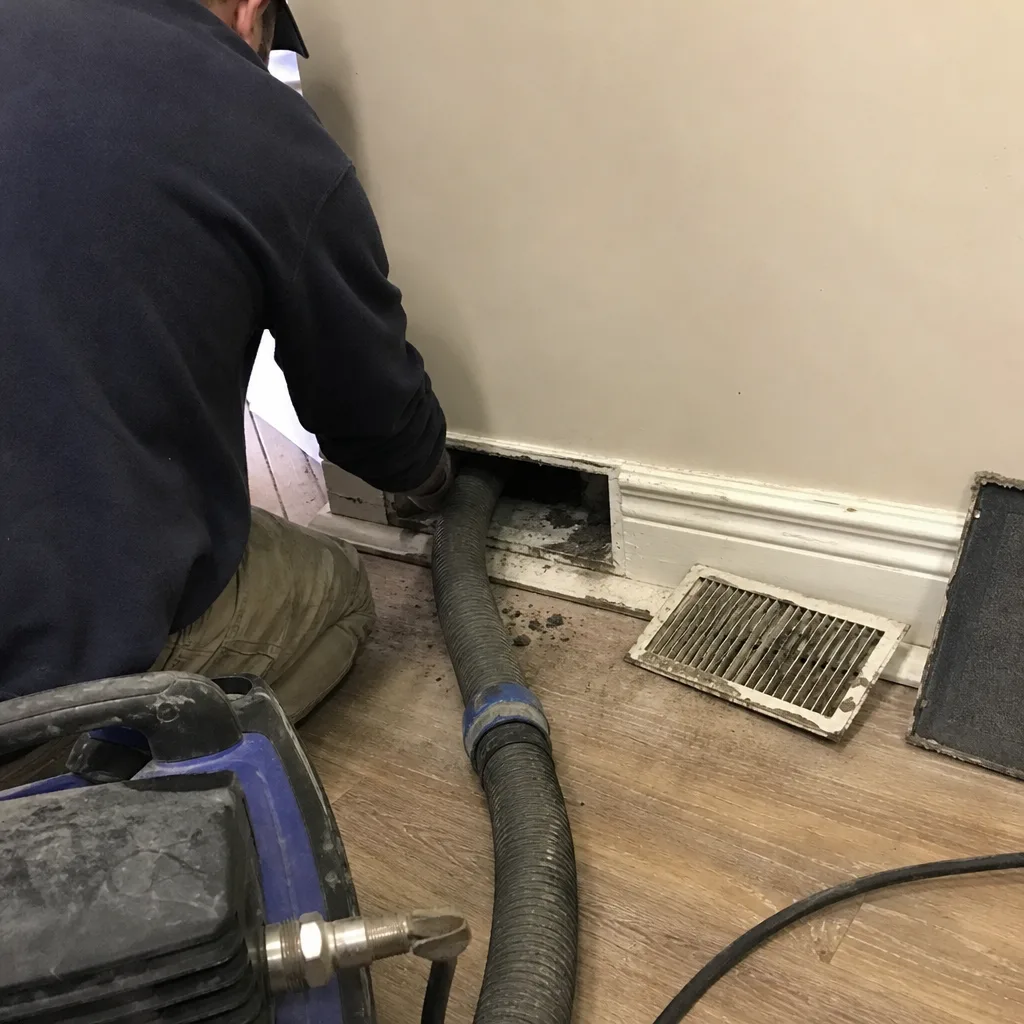 Before
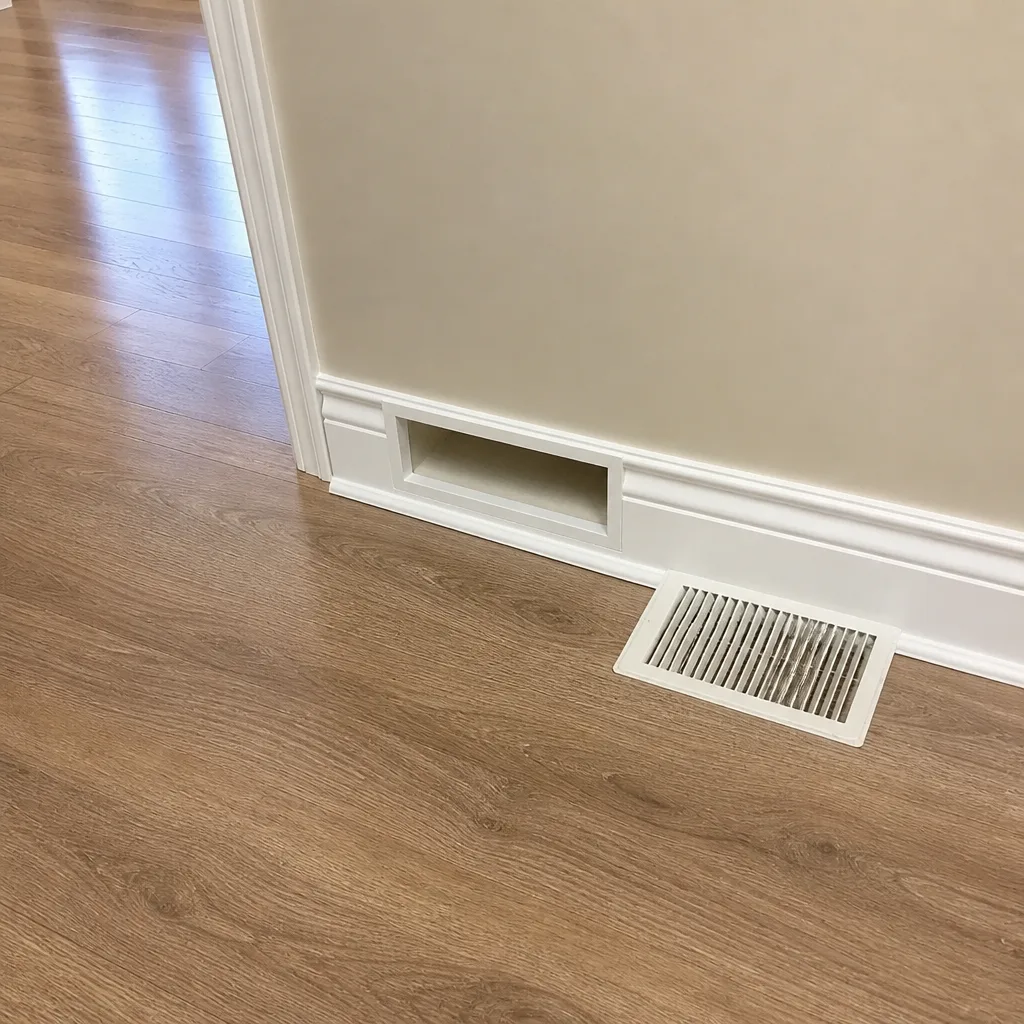 After
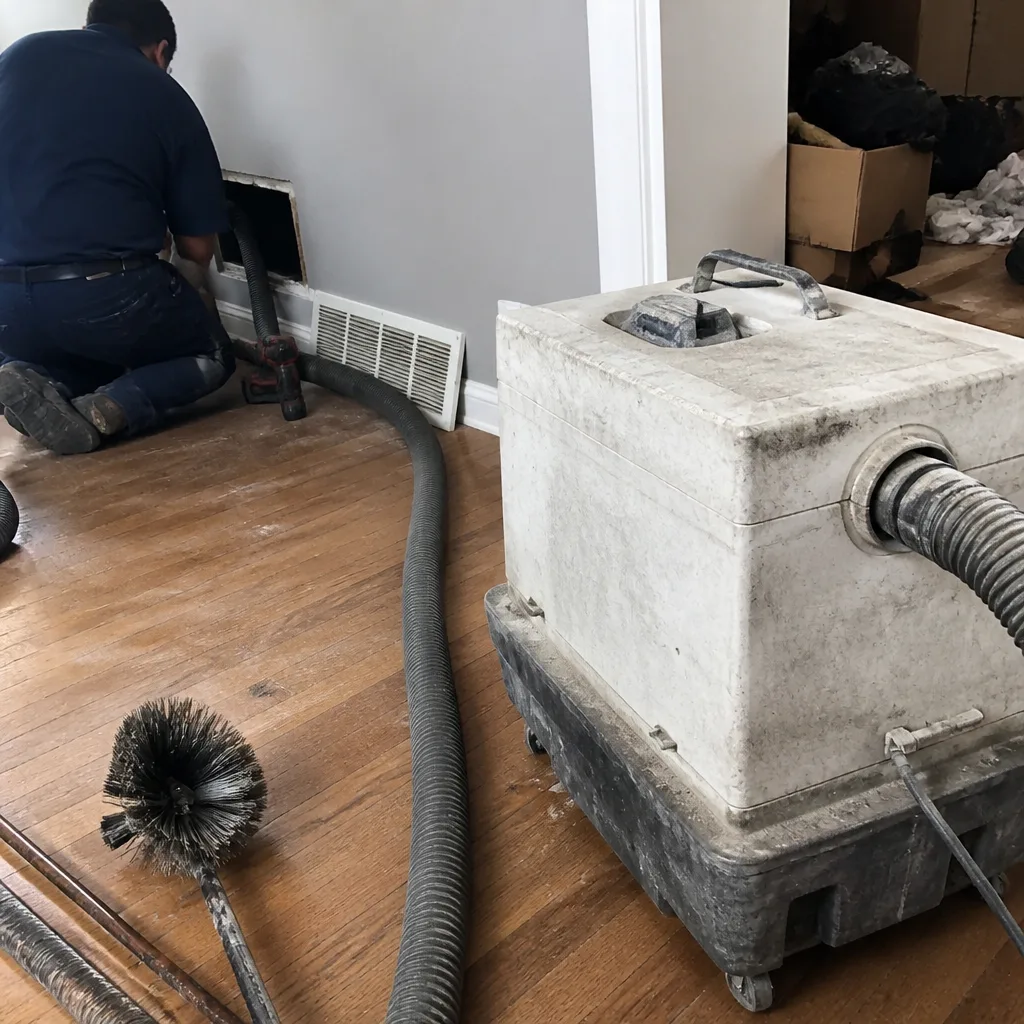 Before
 After
 Before
 After
When to Call a Professional
Call a professional when two or more of the signs on this page line up, or when the pattern has been there for a full season without change. That covers a room that never reaches temperature, weak returns, a runtime trend on your thermostat, an odor that follows the HVAC cycle, or visible accumulation inside the register boots. It also covers post-renovation cleanup, a first-time deep clean on a home with no service history, and any smoky stretch where you’ve run the system with a compromised return or an old filter. Those are all reasons to get an inspection and a written estimate before you make any larger decision about the equipment.
Air Duct Cleaning Green Valley Ranch offers free estimates in Green Valley Ranch – call (833) 513-8603. Our technicians have up to 10 years of experience, and we work with professional-grade Rotobrush and Nikro systems on every job. We repair what we find when the ducts need it, and we’ll tell you plainly if they don’t.
Frequently Asked Questions
The first signs are usually airflow-based: one or two rooms that never reach the set temperature, registers with noticeably weaker output than others in the same home, and return grilles that feel like they’re barely pulling. Visible dust accumulation inside the register boots and an odor that tracks the HVAC cycle confirm the pattern. If you’re seeing two or more of those, it’s worth a professional inspection. Call (833) 513-8603 for a free estimate.
Not necessarily. Most household dust originates indoors – skin cells, fabric fiber, and tracked-in soil – so a dusty coffee table is a housekeeping signal more than a duct signal. The reliable indicators are airflow imbalance, weak return draw, and odor patterns that follow the system cycle. If those are present, get an inspection. If only the furniture is dusty, start with the source rather than the ducts.
A smell that appears when the blower starts and fades when it stops usually points to contamination sitting in the ductwork or on the coil, disturbed by moving air. If the smell is present when the system is off, the source is more likely the air handler, drain pan, or cabinet. Getting that diagnosis right matters, because cleaning the wrong component won’t fix the smell. We can check both on a single visit – call (833) 513-8603.
The duct is the more common cause when the symptom is uneven – one room off, one register weak, or a runtime trend without a corresponding comfort change in most of the house. A failing furnace usually shows up as a whole-house decline. The reliable test is a static pressure and airflow measurement at the equipment, which points straight at the restriction. If the furnace is fine and the ducts aren’t delivering, sealing and repair are usually the fix.
It depends on the pattern. If the indoor smell clears when the outdoor air clears, that’s infiltration from a leak or open envelope, and sealing the return is the higher-priority fix. If the smell persists for weeks after the smoke is gone, ash or debris may have deposited inside the system and cleaning with sanitizing is worth doing. Sealing plus filtration improvements from Aprilaire or Honeywell can also reduce future infiltration during smoke events.
For most homes, every three to five years is a reasonable interval, and after major renovation or a smoky season is a good time to reassess regardless of the calendar. Homes with pets, allergy-sensitive occupants, or a history of leaky return ducts may need it sooner. The honest answer is that the schedule should follow the signs, not the calendar. If your signs point to a cleaning, call (833) 513-8603 and we’ll give you a straight answer.
The Bottom Line
The warning signs that actually matter for a Green Valley Ranch home are mechanical and airflow-based, not cosmetic. Uneven room temperatures, weak returns, runtime trends on a smart thermostat, and odors that follow the HVAC cycle are the signals to watch. Dust on the furniture is not. When two or more of those signals line up, the next step is a full-system inspection that covers the supply, the return, the coil, and the cabinet together, then a written estimate before any work begins. Clean what needs cleaning, repair and seal what’s leaking, and sanitize when the smell has a source. That’s the full path, and it delivers lasting results.
Call (833) 513-8603 for a free estimate. We answer 24/7. Fast dispatch from 7am to 7pm, Sunday through Friday. Our technicians have up to 10 years of experience and use professional-grade Rotobrush and Nikro equipment on every job, with Guardsman products for post-clean protection.
Written by the team at Air Duct Cleaning Green Valley Ranch.