
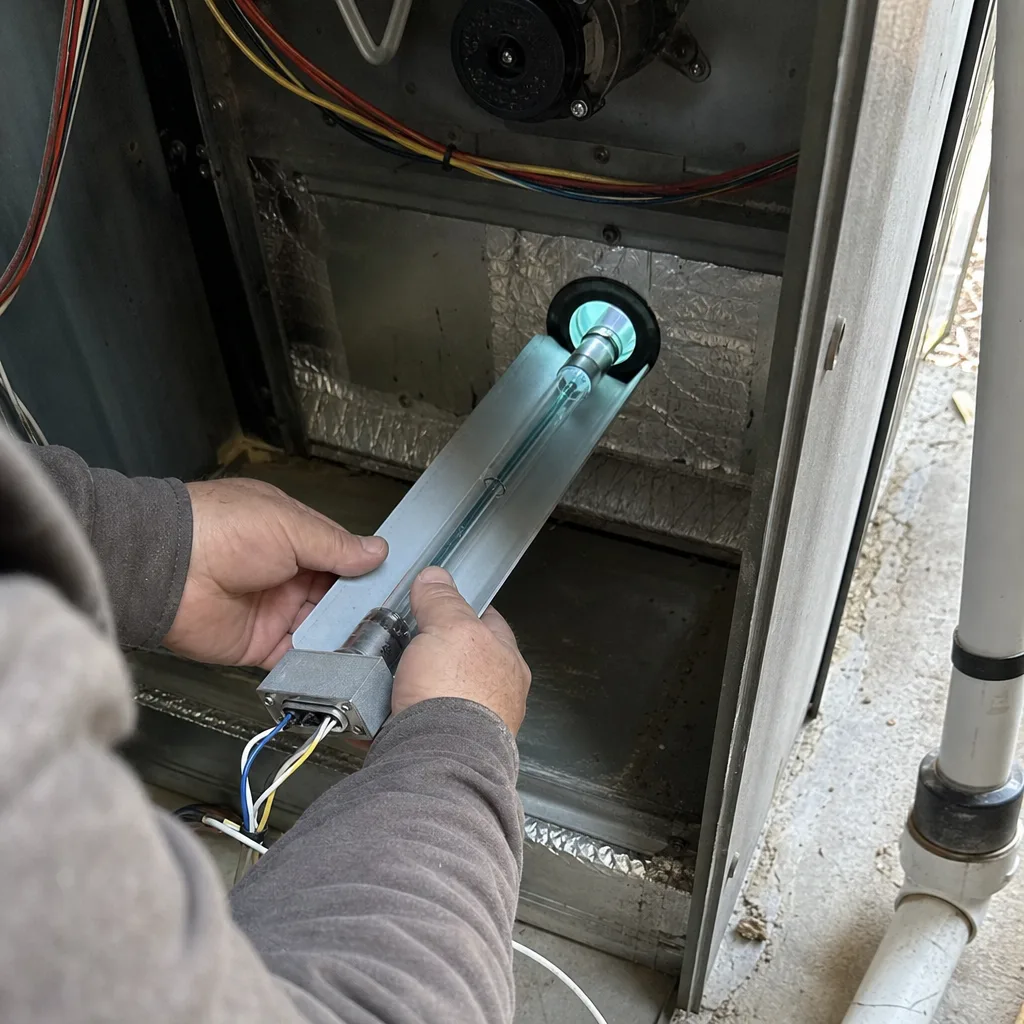
Last updated November 25, 2026
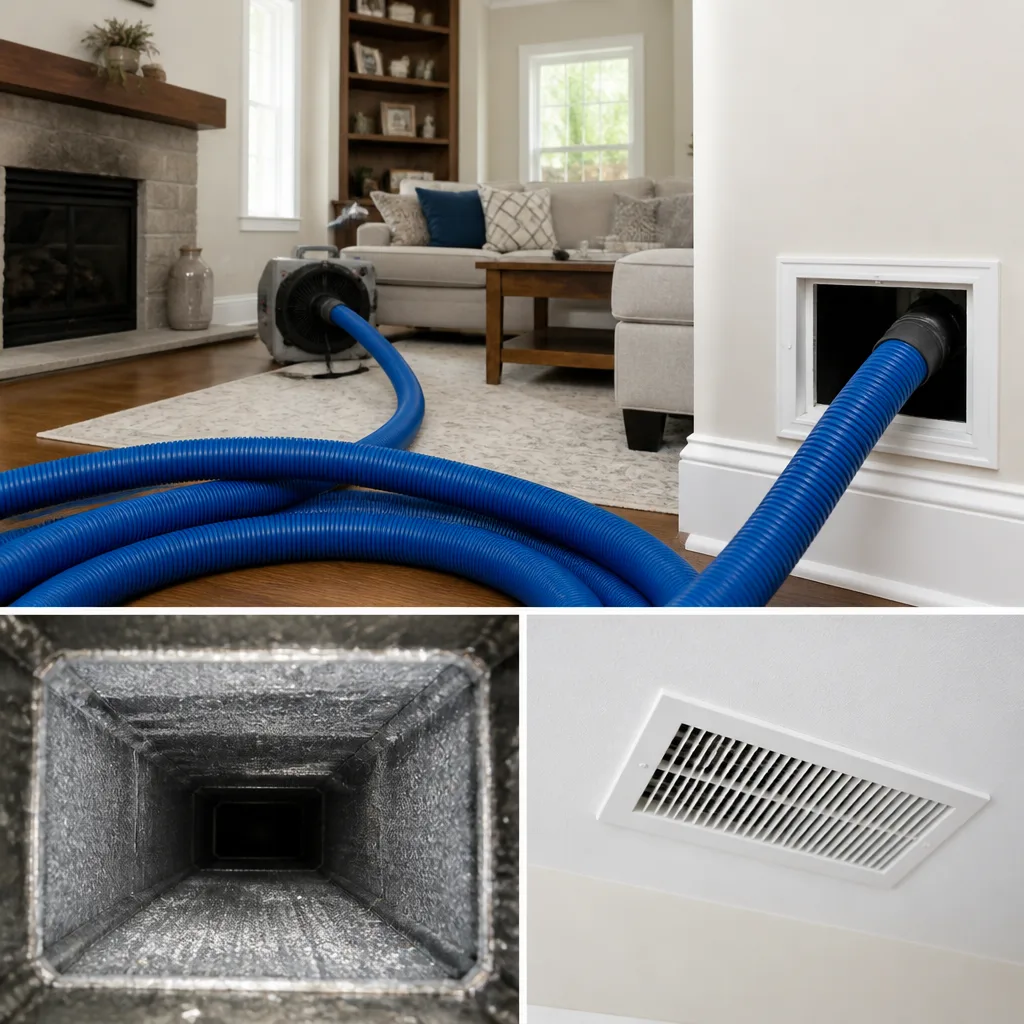 Whole-home duct cleaning
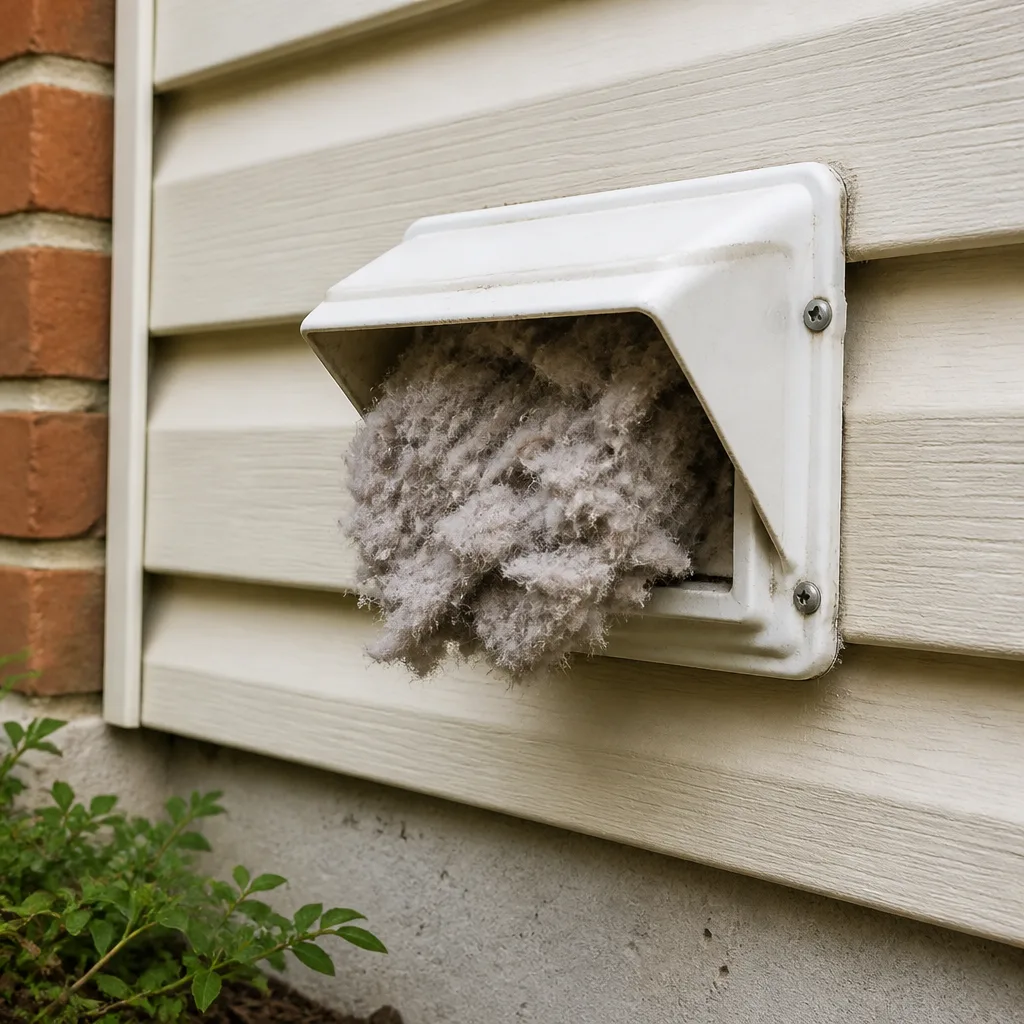 Dryer vent cleaning
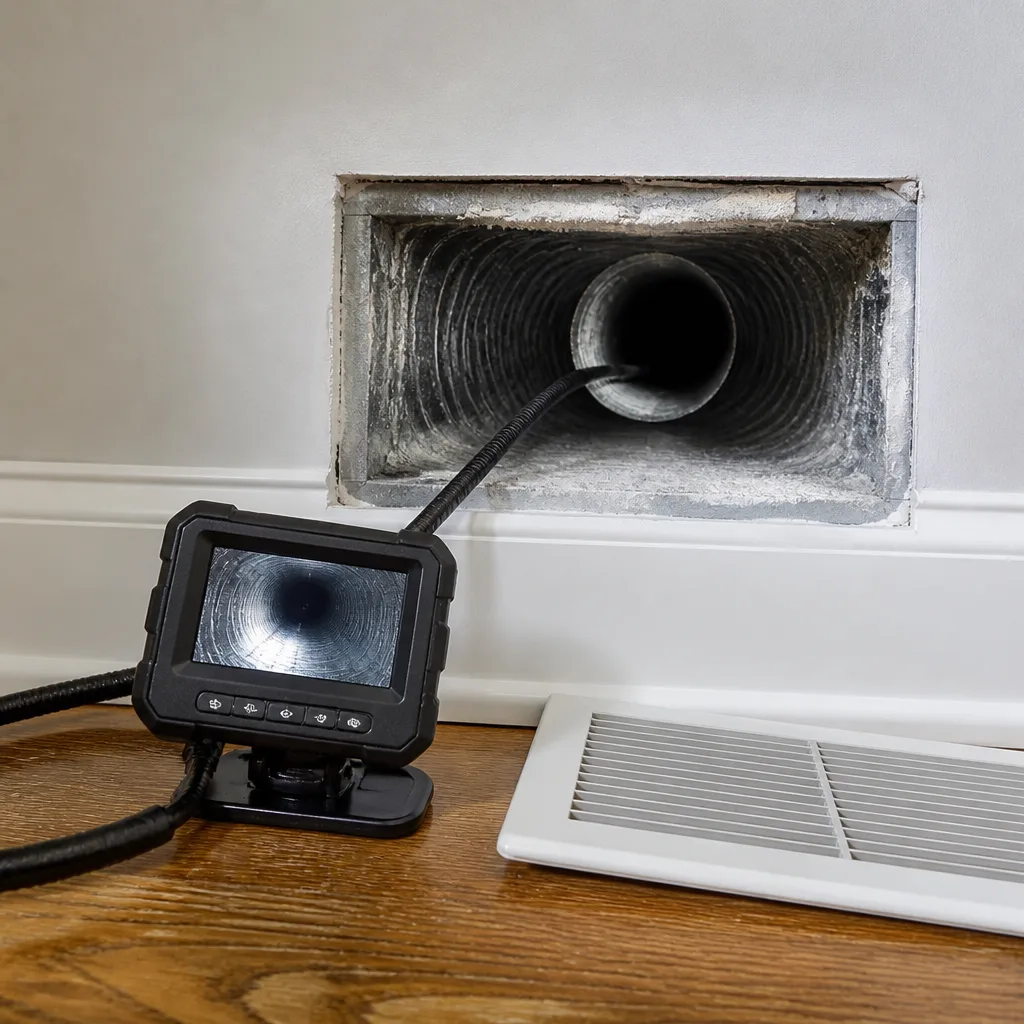 Camera inspection
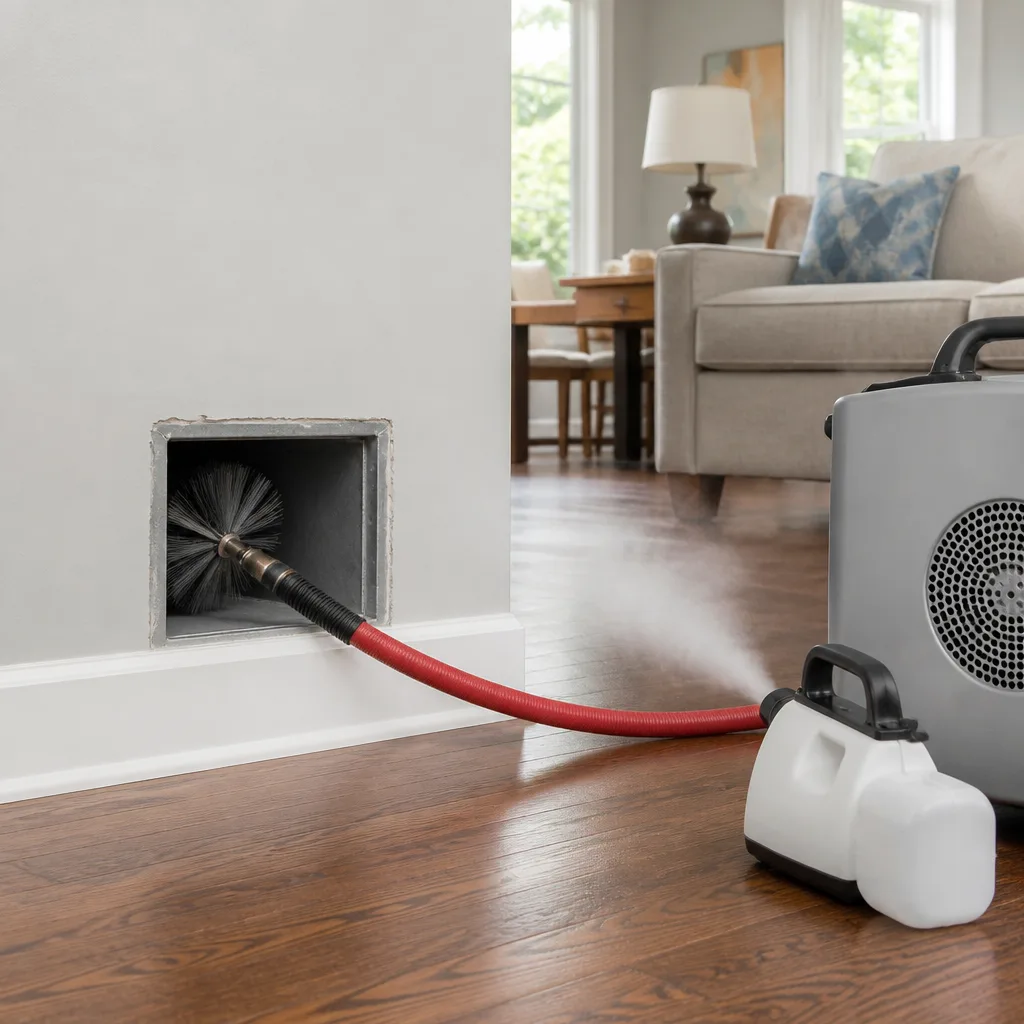 Sanitizing & deodorizing
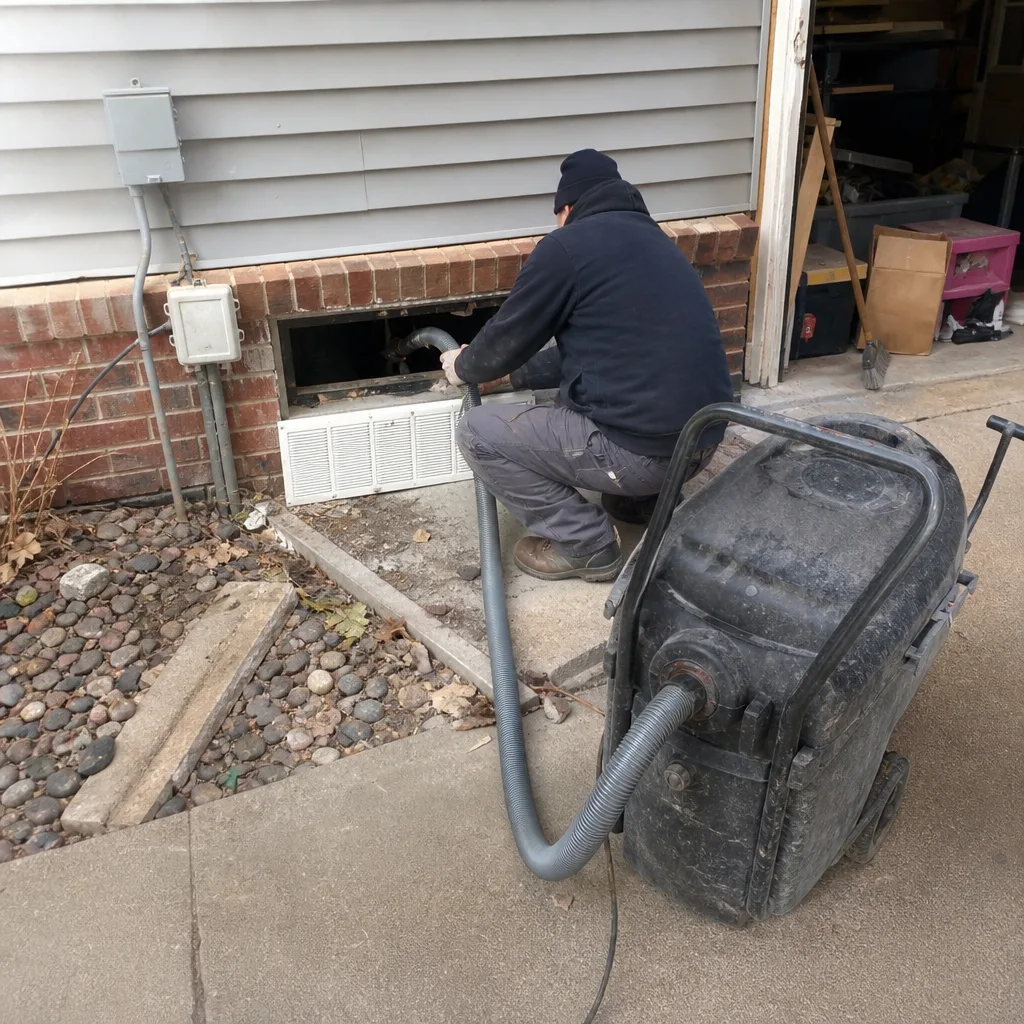
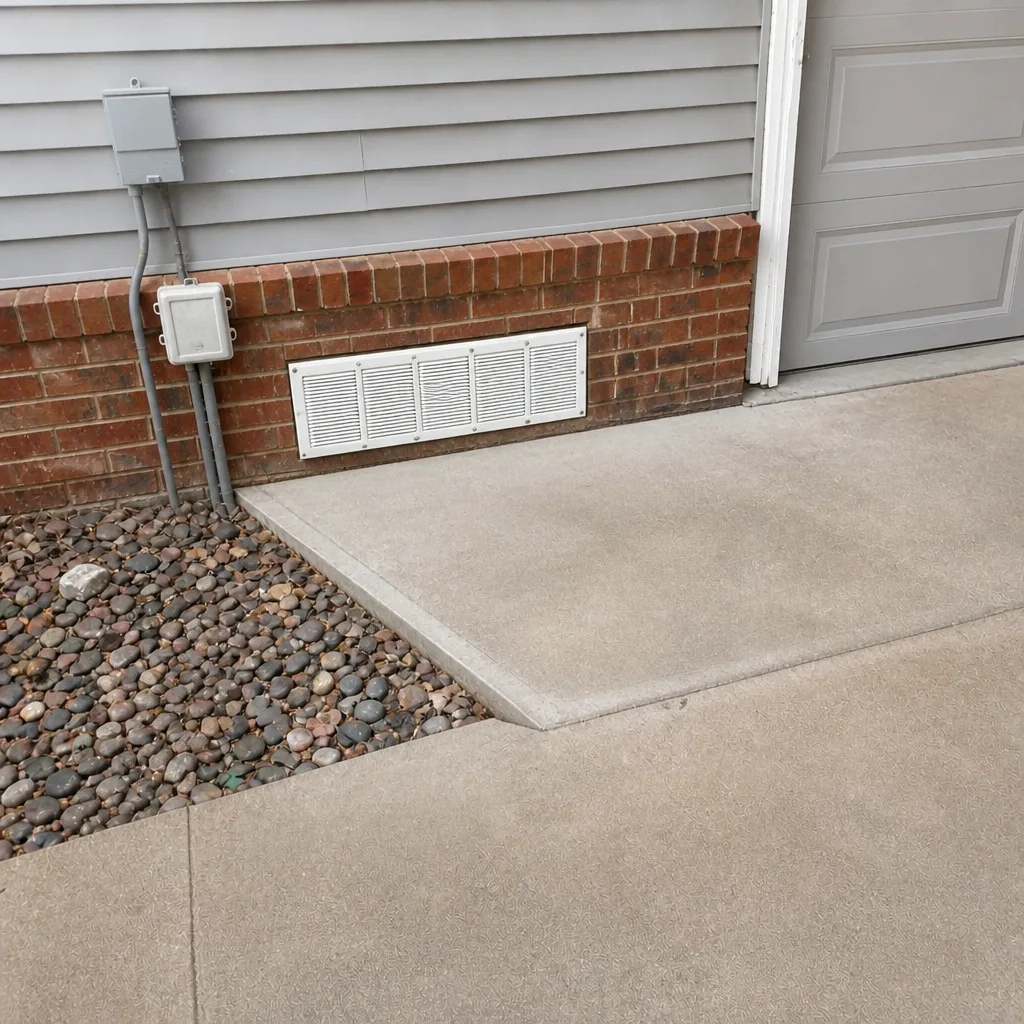
Whole-system duct and dryer vent check with before-and-after photos - you see exactly what came out of your vents
That "$99 whole-house special" is a bait ad - the real number appears once they are in your hallway, or the "clean" is a shop-vac at the register. We photograph the inside of your ducts before and after instead.
DIY vs Professional Air Duct Cleaning: The Green Valley Ranch Homeowner’s Decision Guide
The problem with a shop vac approach to duct cleaning isn’t that it misses some dust. It’s that opening registers and running suction without sealed negative pressure on the main trunk line pulls loosened debris into your living space instead of capturing it. We’ve taken calls from Green Valley Ranch homeowners who spent a weekend on their ducts and ended up with more visible dust on the furniture than when they started. This guide explains the actual physics behind professional duct cleaning, what you can reasonably handle yourself, what requires professional-grade equipment regardless of your skill level, and how to judge whether a DIY attempt helped or hurt. It’s written for people who want to understand the work before they pay for it, or before they decide not to.
Quick Answer
Professional air duct cleaning wins over DIY in almost every case because consumer equipment can’t generate the sealed negative pressure that keeps loosened contamination inside the ductwork instead of redistributing it into your rooms. DIY is genuinely useful for surface tasks like wiping registers and washing return grilles, but anything touching the main trunk line, the air handler coil, or duct sanitizing requires professional equipment like Rotobrush or Nikro systems running in containment. If your ducts are visibly fouled, recently renovated, or tied to allergy symptoms, the professional route is the only one that removes contamination rather than moving it around.
Styles & brands we work with
- Whole-home duct cleaning
- Dryer vent cleaning
- Camera inspection
- Sanitizing & deodorizing
Table of Contents
- Why Negative Pressure Is the Whole Game in Duct Cleaning
- What You Can Legitimately Do Yourself
- The Tasks That Require Professional Equipment
- The Cost-Benefit Reality Check
- How to Tell If a Previous DIY Attempt Made Things Worse
- Green Valley Ranch Factors That Affect the Decision
- A Step-by-Step Way to Make the Call
- Common Mistakes to Avoid
Why Negative Pressure Is the Whole Game in Duct Cleaning
Every professional duct cleaning system is built around one principle: pull the loosened material toward a capture point while keeping the whole system under negative pressure so nothing escapes into the living space. That’s not marketing language. It’s the specific engineering difference between cleaning a duct and stirring one up.
When a technician connects a Rotobrush or Nikro machine to the main trunk line and seals the openings, the machine creates a pressure differential across the duct system. Air rushes in from every small gap and register opening, carrying loosened dust and debris toward the vacuum source. A consumer shop vac pulls maybe a couple hundred cubic feet per minute at the hose end, and that figure collapses the moment you attach it to a duct opening without sealing. The typical household vacuum produces nowhere near the air volume a duct system needs to move debris down a long run. What actually happens is that the shop vac creates localized suction at one register while loosening dust in a different branch of the system, and that dust has no reason to travel toward the vacuum. It settles back into the ducts or drifts out through the registers into the room.
Professional equipment also pairs that pressure differential with mechanical agitation. Rotating brush heads and air whips run down the duct interior to break material free while the vacuum holds the whole system under suction. Abatement Technologies equipment adds another layer for jobs that require containment and HEPA filtration during service, which matters when the ductwork carries heavy contamination or the home is occupied during the work. Consumer tools have no equivalent to any of this.
The practical result: a shop vac and brush kit can loosen dust inside a Green Valley Ranch duct system, but it can’t capture it with enough reliability to call the job done. In our experience, that’s the failure mode that trips up most DIY attempts. Not an absence of effort. A lack of pressure.
What You Can Legitimately Do Yourself
Homeowners who take on part of the maintenance work get real value from it. There are three tasks where DIY effort helps and carries no downside, and we’d rather tell you to do those yourself than sell you a service call for surface cleaning.
- Clean and wipe the supply registers. Pop the grilles off, wash them in a sink with warm soapy water, dry them fully, and reinstall. Dust that collects on the face of a register is room dust, not duct residue, and a cloth handles it. This is a five-minute job per register and it improves airflow slightly when the slots are clogged.
- Wash the return air grille. The large return grille pulls a lot of air and traps a surprising amount of lint on the back face. Take it down, vacuum the back, wash and dry it, put it back. You’ll notice the difference in how easily the system breathes.
- Inspect accessible flex duct runs. If you can safely reach a section of flexible duct in an attic or basement without climbing on anything risky, look for crushed sections, kinked runs, disconnected collars, or visible tears. Note what you see and mention it when you call a technician. You’re not repairing it yourself, but a report of what you found speeds up the assessment.
What you should not do is open a register, run a shop vac hose into the duct, and expect the dust to disappear. The short version: cleaning what you can see is fine, touching what you can’t see is where DIY goes wrong. Register cleaning and grille washing are surface work that doesn’t reach into the system. The interior of the duct is a different environment, and it’s governed by the pressure rules above.
If you own a rental property in Green Valley Ranch and manage it yourself, register cleaning and grille washing between tenants is worth doing. It’s cheap, it’s safe, and it removes the most visible dust layer before a new tenant moves in. Just don’t treat it as a substitute for a full-system cleaning when the ducts haven’t been touched in years.
The Tasks That Require Professional Equipment
Three categories of work need professional tools and the training to use them, regardless of how careful or capable the homeowner is. If your situation falls into any of these, DIY isn’t a shortcut. It’s a different job that doesn’t accomplish the same result.
Main trunk line cleaning. The trunk is the large rectangular duct that carries the bulk of the air from the furnace or air handler to the branch ducts. It’s the longest run in most homes, and it’s where the heaviest accumulation collects. Cleaning it needs a sealed connection, sustained negative pressure across the whole trunk, and mechanical agitation through the run. You cannot reach past the first few feet with a shop vac hose, and the hose itself doesn’t generate enough airflow to move accumulated debris to the capture point. A full trunk cleaning is one of the defining tasks of professional air duct cleaning, and it’s the step that consumer equipment can’t replicate.
Air handler coil cleaning. The evaporator coil sits inside the air handler and, when it’s dirty, restricts airflow and cuts system efficiency. Getting to the coil safely means shutting the system down, opening the cabinet, and cleaning without bending fins or disconnecting lines. It also means managing the water and cleaning solution that comes off the coil. This is not a job for a homeowner with a vacuum, and it’s not a job for a duct cleaner who doesn’t carry the right equipment either. HVAC cleaning covers the air handler, the coil, and the components around it as one system, which is how it should be handled.
Duct sanitizing. Applying a sanitizing treatment to a duct system requires that the ducts be fully cleaned and dry first, and the application has to reach the whole interior. A homeowner with a spray bottle can coat the first few feet of the nearest register but not the trunk or the branches. Guardsman treatment products are designed for post-clean protection and sanitizing, and they’re applied with equipment that reaches the full system. Doing it wrong, spraying into a still-dirty duct, simply seals contamination in place.
One more that gets overlooked: dryer vent cleaning. The dryer vent is a separate duct system, and it’s a fire-risk reduction task that most air duct cleaners skip entirely. Blocked dryer vents trap lint and heat, and the vent run in a typical Green Valley Ranch home can be fifteen to twenty feet with several elbows. A homeowner vacuuming lint from the outside vent opening clears the first foot at best. The rest of the run needs a rotary brush on a flexible rod fed from the correct end, which is a professional tool. It’s a short job with professionals and a potentially dangerous one to skip.
If you’re also wondering what the full system includes from a duct-to-air-quality standpoint, our air duct cleaning Green Valley Ranch service overview lays out the five core services and the equipment used on each.
The Cost-Benefit Reality Check
Homeowners often start this comparison by assuming professional cleaning will cost five or ten times what a DIY attempt costs. Run the numbers honestly and the gap narrows more than most people expect, especially for a first-time deep clean.
A DIY attempt isn’t free. It requires a shop vac if you don’t already own one, a duct brush kit, and a full day of wrestling hoses through the house. If the attempt leaves contamination redistributed through the living space, the follow-up involves cleaning the rooms again and scheduling the professional cleaning you were trying to avoid. That’s not a catastrophe, but it’s real time and real cost. And the professional visit wasn’t optional in the first place.
Here’s how we’d frame the comparison by situation:
- Recently cleaned ducts, only surface dust visible. DIY register and grille cleaning is fine. Skip the full-system cleaning until the ducts have accumulated material.
- First deep clean in a home that’s been lived in for years. The full-system cleaning is the only route that removes the accumulation. DIY doesn’t reach the trunk, so it doesn’t do the job.
- Post-renovation cleanup. Drywall dust and construction debris settle deep into the duct system. A shop vac will not pull it out, and the attempt often pushes it further into the branches. Go professional.
- Allergy or respiratory symptoms tied to the home. You need a cleaned and sanitized system. DIY can’t sanitize the full run, so it doesn’t address the concern.
- Property turnover between tenants. A professional clean is a documented baseline for the next tenant. DIY leaves no proof of work and no documentation.
For most Green Valley Ranch homeowners facing a first deep clean or a post-renovation job, the professional route is the only one that does what needs doing. DIY only makes economic sense when the ducts are already in good shape and you’re just keeping registers tidy.
How to Tell If a Previous DIY Attempt Made Things Worse
We can usually spot a DIY attempt within the first ten minutes of an assessment. The signs are specific, and homeowners should know what to look for so they can report it accurately when they call.
The first sign is dust visible on horizontal surfaces immediately after an attempt. If you vacuumed, ran a shop vac into a register, and then found a fresh layer of dust on the furniture within a day or two, the attempt redistributed rather than captured. That’s the negative pressure problem in action.
The second sign is dust streaks around the register frame or on the ceiling nearby. When loosened debris gets pushed out through the register slots instead of pulled toward a capture point, it leaves a trail. Wipe the area near the register after a couple of days and see if it reappears.
The third sign is a worsening smell. A DIY clean that loosens material without removing it can redistribute organic debris in a way that makes a musty or dusty smell more noticeable. If the smell gets worse after an attempt, that’s a signal the contamination moved, not disappeared.
A technician assessing a possible DIY situation looks for specific evidence:
- Debris pattern in the branches. If the branch runs show intermittent dust with clean sections between, the vacuum captured some material and dropped the rest. That pattern reads as DIY.
- Disturbed insulation in the duct interior. Brush kits that were never designed for the duct material can pull fibrous insulation liner loose, which leaves a lint trail through the system.
- Register screens pushed inward or bent. A shop vac hose jammed into a register opening often deforms the screen. That’s a marker of a DIY attempt.
- Disconnected or kinked flex duct behind the register. Pulling a hose out of a flexible duct can stretch the collar loose, which then leaks conditioned air into the attic or crawl space.
None of these are disasters. They’re correctable. A professional cleaning with containment and the right equipment removes the redistribution, and if a duct is damaged, duct repair and sealing puts it right. That’s the “we repair what we find” part of how we work.
Green Valley Ranch Factors That Affect the Decision
Green Valley Ranch sits at the eastern edge of the Denver metro, on open ground east of the city where wind moves across the plains with less obstruction. That’s a real factor in how fast ducts load up. Wind-driven dust and fine grit from the open land east of Green Valley Ranch find their way into return air grilles faster than in neighborhoods sheltered by trees or hills, and the return side of a duct system is where most of that material collects.
The dry climate matters too. Colorado’s low humidity means the dust that settles into ducts stays dry and loose rather than clumping. Dry dust is easier to move once it’s loosened, which is good news for professional cleaning and bad news for a DIY attempt that loosens without capturing. The dry dust can drift out of a register in the middle of an attempt and settle visibly. In humid climates, dust tends to stick, so DIY loosening produces less airborne redistribution. Here, the redistribution is more visible.
Green Valley Ranch’s housing stock includes a lot of newer construction with flexible duct runs in the attic, and those flex ducts are more fragile than the rigid rectangular duct in older homes. Flex duct also has more interior surface area per foot where dust collects. The combination of fast accumulation from wind-driven dust and the fragility of flex duct makes the professional route more important, not less, in a Green Valley Ranch home.
The final factor is renovation. Green Valley Ranch has seen steady turnover and remodel activity, and any home that’s had drywall, flooring, or cabinets replaced carries construction dust deep in the system. Drywall dust is fine and abrasive, and it settles into every branch. A shop vac can’t remove it, and the attempt tends to push it deeper. It calls for a professional clean with containment equipment that keeps the dust from drifting back into the rooms during the work.
Property managers handling rentals across Green Valley Ranch get a different angle. Documented professional cleaning after a renovation or between long-term tenants gives you a record of what was done and when, which matters if a tenant raises an air quality concern later. That’s a stronger position than “we cleaned the registers ourselves.”
A Step-by-Step Way to Make the Call
If you’re on the fence between DIY and professional, work through these steps in order. The answer usually falls out of the assessment by step four.
- Look at your registers and grilles. If the visible surfaces are dusty but the dust is on the face of the register rather than the interior, that’s surface work. DIY handles it.
- Check the return air grille filter. A clogged return filter starves the system and lets more dust bypass into the ducts. Replace the filter before doing anything else, and note how dirty it was. Rapid filter loading is a sign the ducts are carrying more material than they should.
- Look for recent renovation or water damage. If the home has had drywall work, flooring replacement, or a leak in the last couple of years, the ducts carry material a home vacuum can’t remove. Go professional.
- Check for symptoms. If anyone in the household notices more sneezing, dust on the furniture that returns within a day or two of cleaning, or a musty smell when the system runs, the system is contaminated enough that DIY won’t fix it.
- Look at the accessible duct runs if you can safely reach them. Crushed flex duct, loose collars, or visible tears mean the system needs repair work, which is professional territory regardless of cleaning.
- Estimate the age of the last cleaning. If the ducts have never been cleaned or haven’t been touched in years, the job is a full-system clean. The professional route is the only one that does it.
- Decide based on what you found. Surface dust and a clean filter? DIY is fine. Anything deeper, or anything tied to a health concern or renovation, and professional is the right call.
If your conclusion is professional, the free estimate process is straightforward. We walk the system, note what we find, and give you a fixed price per system before any work starts. Call (833) 513-8603, and we’ll book a time that works.
Common Mistakes to Avoid
- Opening every register before starting a DIY vacuum attempt. Opening multiple registers at once kills whatever pressure differential your shop vac could generate and sends loosened dust into the rooms. Keep registers closed until a professional is on site with sealed containment.
- Using a shop vac on the air handler cabinet. Air handler cabinets contain electrical components and a coil that bends easily. A shop vac hose in the cabinet can damage the coil fins or pull condensate into places where it shouldn’t be. Leave the air handler to a technician.
- Assuming a cheap coupon price means a full-system clean. A very low advertised price often covers a surface vacuum of the nearest runs only. In Green Valley Ranch, where flex duct and wind-driven dust make full-system cleaning the right answer, a partial job doesn’t solve the problem. Ask what’s included before booking.
- Skipping the dryer vent. The dryer vent is a separate system and a genuine fire risk if it’s clogged. Homeowners focused on the air ducts often forget it entirely. Have it checked in the same visit.
- Spraying sanitizer into ducts that haven’t been cleaned. Sanitizing works only after the system is clean and dry. Spraying into a dirty duct traps the contamination under the coating and can make the smell worse. Clean first, sanitize after.
- Treating a duct cleaning as a one-time fix without addressing leaks. If the duct system has disconnected joints or unsealed collars, contamination re-enters within weeks of a cleaning. Duct repair and sealing is the step that makes the clean last.
- Ignoring filter loading after a renovation. Construction dust loads filters fast. Change the filter after the renovation is finished, and consider a full system clean if the filter clogged quickly during the work.
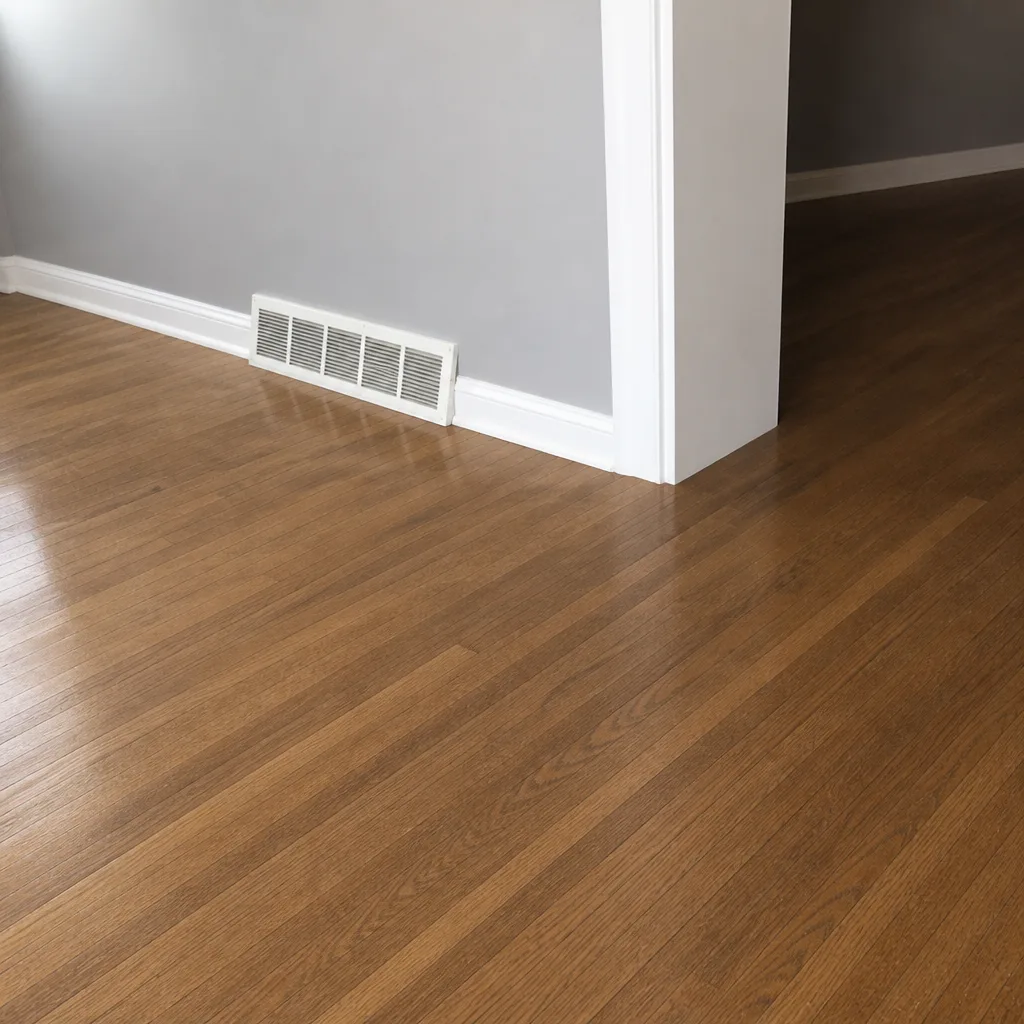
See the difference
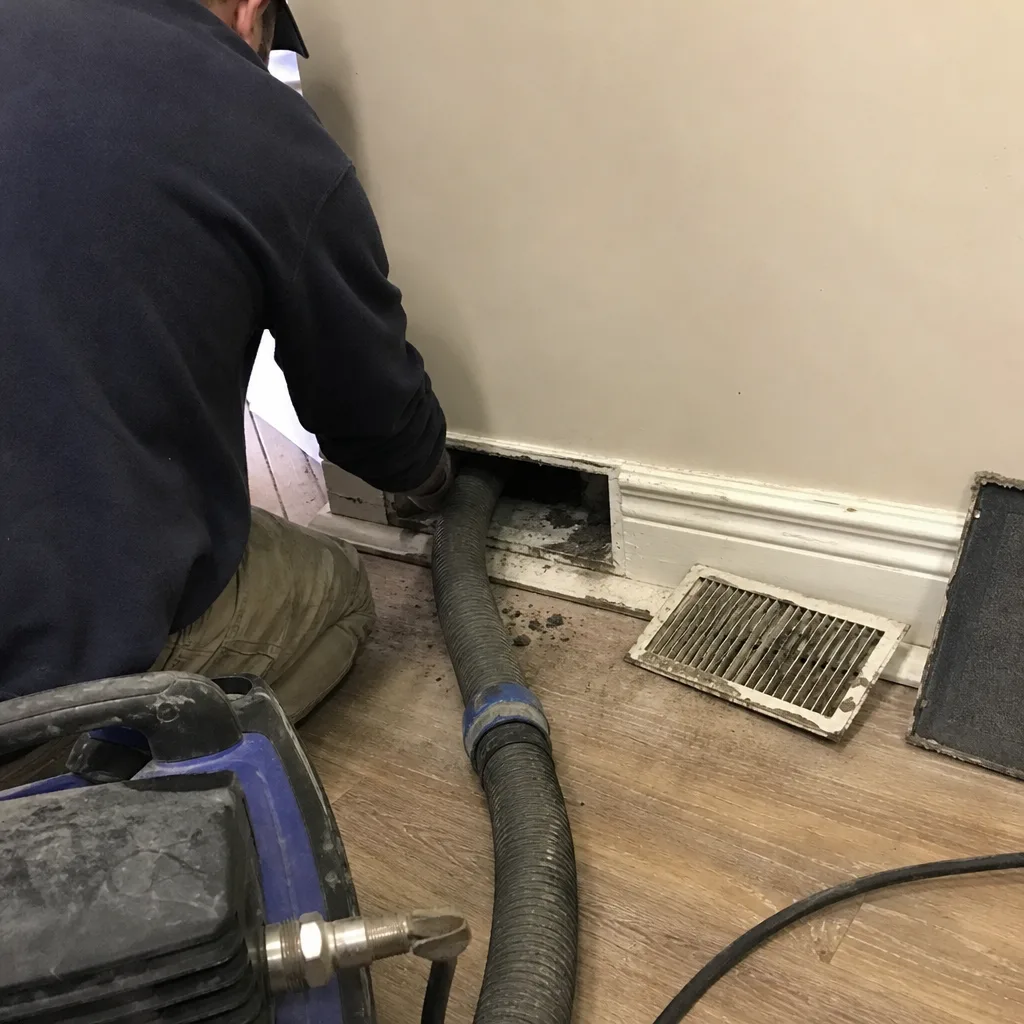 Before
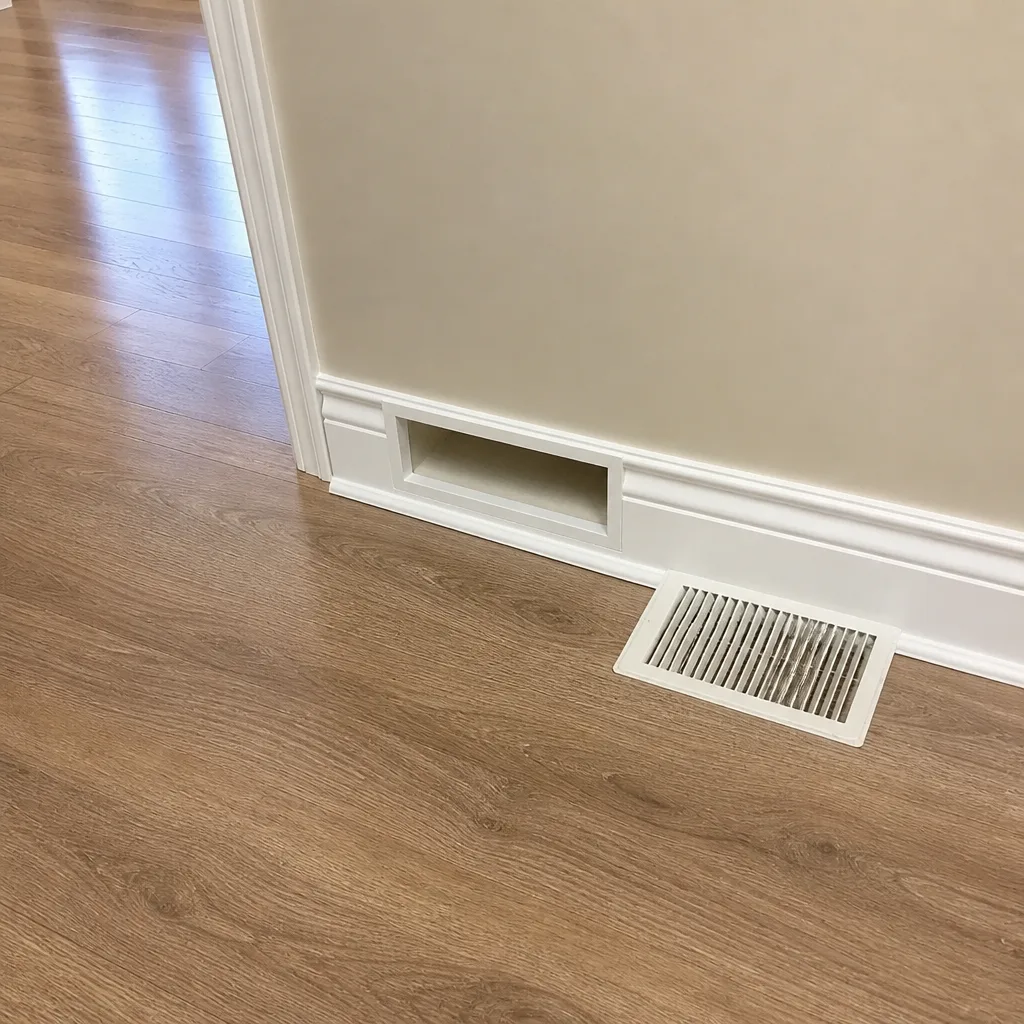 After
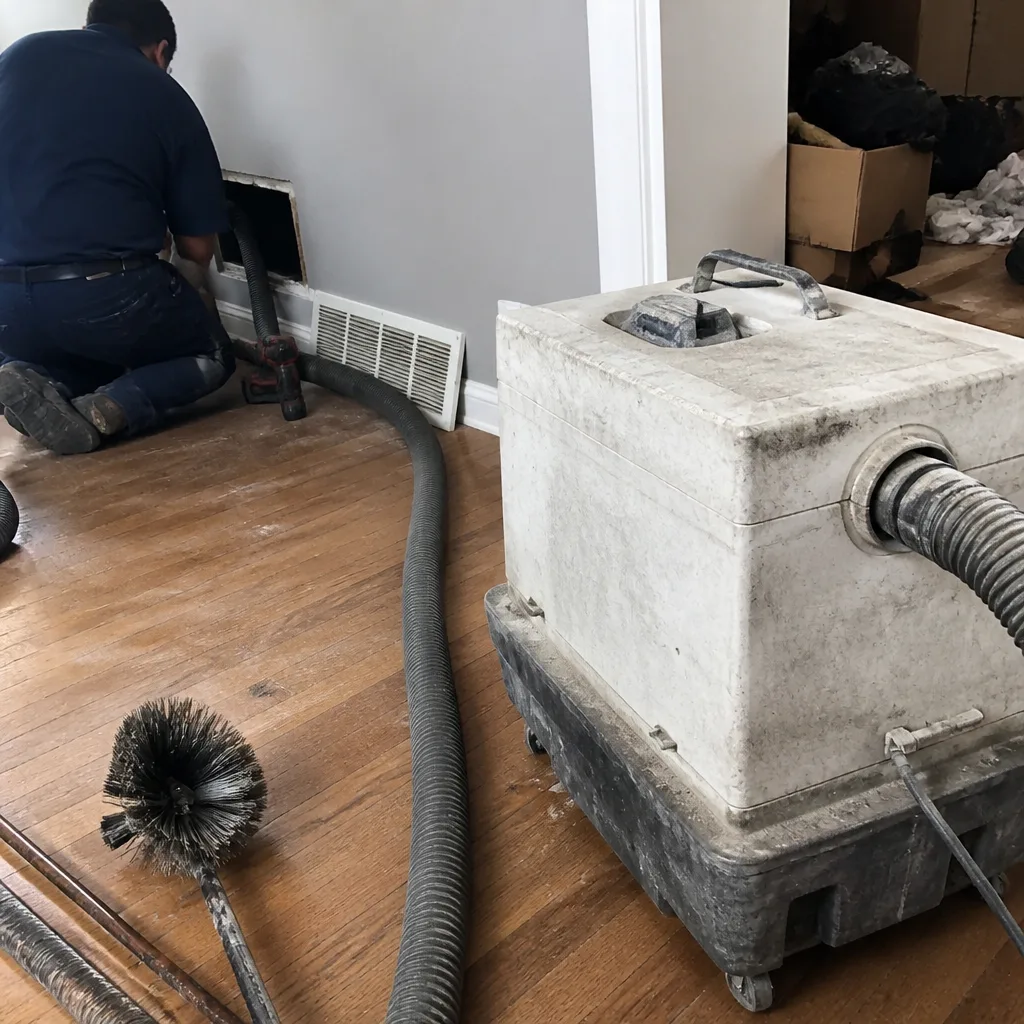 Before
 After
 Before
 After
When to Call a Professional
Call us when the dust you’re dealing with is inside the duct system rather than on its surface. If the home has never had a duct cleaning, if the ducts haven’t been touched since you moved in, if you’ve recently replaced drywall or flooring, if the return filter loads fast, if there’s a musty smell when the system runs, or if anyone in the home has air quality concerns that seem tied to the HVAC, the professional route is the one that resolves it. If the ducts are already in good shape and you just want the registers wiped, that’s a job you can do. Air Duct Cleaning Green Valley Ranch offers free estimates in Green Valley Ranch, and we’ll tell you straight whether your situation calls for a full-system clean. Call (833) 513-8603.
Frequently Asked Questions
Duct cleaning is priced per system based on what your particular system needs, and the written estimate sets the final price after we’ve seen it. Whether it’s worth it over DIY comes down to a single question: are your ducts contaminated past the surface, or is it just visible dust? Surface dust, register grime, and return grille lint are DIY work. Contamination in the trunk, the branches, or the air handler needs professional equipment, and that’s where DIY stops being an option regardless of price.
No, not the inside of the duct system. A shop vac can clean the face of the registers and can vacuum around a return grille, but it cannot generate the sealed negative pressure across the trunk line that keeps loosened dust moving toward a capture point instead of into the room. Opening registers and running a shop vac hose inside typically redistributes dust rather than removing it.
Very low quotes usually cover a shorter list of work than a full-system cleaning. The pricing often assumes a surface vacuum of the nearest supply runs and skips the trunk, the air handler coil, and the sanitizing step. Some quotes also skip the dryer vent. When you compare quotes, ask what’s included: main trunk cleaning, branch cleaning, air handler, sanitizing, and dryer vent. The lower quote usually leaves out at least two of those.
Ask for before-and-after photos from inside the duct system, taken during the job. Professional equipment includes a camera that lets the technician document what they find. A shop vac attempt leaves no such record and no way to verify it, which is one reason a professional clean is easier to trust. Ask to see the photos as part of the quote process.
The main risk is redistributing contamination into the living space, which makes symptoms and dust worse rather than better. Secondary risks include damaging flexible duct, pulling insulation liner loose, bending the air handler coil fins if you reach inside the cabinet, and leaving the system exposed to recontamination if a duct collar gets knocked loose. None of these are catastrophic, but all of them mean the DIY attempt did not achieve the result you were after and the professional job still needs to happen.
It can. When loosened dust and debris get redistributed into the room air instead of captured, airborne particulates temporarily increase. For someone with dust or mold sensitivities, that redistribution can trigger symptoms worse than the original condition. If the concern driving the cleaning is an allergy or respiratory issue, it’s the strongest case for going straight to a professional clean with containment equipment.
The right interval depends on your situation. Homes with pets, recent renovation, or occupants with air quality concerns may need it more often than homes without those factors. Green Valley Ranch’s dry, windy environment and the prevalence of flexible duct runs mean accumulation tends to be faster than in more sheltered climates. A reasonable approach is to assess every couple of years: check filter loading rates, look at register dust, and schedule a cleaning when the accumulation is visible or the filter loads noticeably fast.
A technician can usually identify the signs within minutes: intermittent dust patterns in the branches, disturbed insulation liner, bent register screens, or loose flex duct collars. The correction is a professional clean with containment, plus duct repair and sealing if any connection was damaged. In most cases the fix takes the same visit as a standard clean with a bit more time for repair work. Call (833) 513-8603 and we’ll assess it during the free estimate.
The Bottom Line
DIY duct cleaning isn’t a bad idea because homeowners lack skill. It’s a bad idea because consumer equipment can’t generate the sealed negative pressure that professional duct cleaning depends on, and that pressure differential is the difference between removing contamination and redistributing it. Register cleaning, grille washing, and accessible duct inspection are legitimately DIY tasks that improve airflow and give you useful information. Everything past that, from the main trunk line to the air handler coil to the sanitizing step to the dryer vent, needs professional equipment and the training to use it. For most Green Valley Ranch homes facing a first deep clean, a post-renovation job, or an air quality concern, the professional route is the only one that solves the actual problem. Professional-grade equipment, not entry-level tools, is what makes the difference.
Written by the team at Air Duct Cleaning Green Valley Ranch.